About
Transitions are some of the most frequent and most emotionally charged moments in School Age Care. Moving from school to OSHC, between activities, indoors to outdoors, or toward pick up can place significant demands on children and young people’s nervous systems, sense of safety, and autonomy.
Rethinking Transitions in School Age Care invites educators to slow down and look more closely at what is happening beneath the surface during these everyday moments. Rather than viewing transitions as logistical tasks to manage, this course reframes them as relational opportunities to build regulation, trust, agency, and belonging.
Grounded in contemporary neuroscience, the Phoenix Cups® Framework, and guidance oriented, rights-based practice, this course explores why transitions are often where challenges show up, particularly for children and young people who are tired, hungry, overstimulated, new to the service, or navigating increasing independence.
Designed specifically for School Age Care, including long day care services that offer school aged programs, the course offers practical, realistic strategies that fit within busy environments, mixed age groups, and shared school spaces. Educators are supported to strengthen both safety and connection, creating smoother transitions that reduce stress and support wellbeing for children, young people, and teams alike.
Get your copy of the full workshop brochure
See workshop overviews, learning focus, and delivery options in the format that suits you. Browse online or download a printable copy to share with your team.
View interactive brochure Download PDF brochure

We will...
- explore why transitions place increased demands on children and young people’s nervous systems
- examine transitions through a needs-based lens using the Phoenix Cups® Framework
- reframe resistance, withdrawal, and dysregulation as adaptive responses rather than misbehaviour
- explore how predictability, rhythm, and relational presence support felt safety
- identify practical strategies that support agency, autonomy, and choice within necessary structure
- consider the role of active supervision as a relational practice, not just a regulatory requirement
- reflect on common transition points in School Age Care and design intentional, responsive adjustments

Participant Outcomes
By the end of this course, participants will have:
- a deeper understanding of why transitions can be challenging for children and young people
- increased confidence responding to transition related behaviours in ways that are calm, connected and consistent
- practical strategies to support regulation, agency, and cooperation during everyday transitions
- shared language to support consistent, team wide approaches to transition practices
- greater insight into how intentional routines and educator presence build trust and belonging
Theoretical underpinnings
Neuroscience of Regulation, Prediction and Emotion
Lisa Feldman Barrett, Bruce Perry, Stephen Porges
Neuroscience shows that the brain is constantly predicting what comes next to maintain safety. During transitions, uncertainty and rapid change increase cognitive and emotional load. Predictable, relational transitions support nervous system regulation and felt safety, while rushed or unclear transitions can activate stress responses.
Self-Determination Theory
Edward Deci and Richard Ryan
Self-Determination Theory identifies autonomy, competence, and relatedness as core psychological needs. Transitions that allow choice, voice, and participation support children and young people to feel capable, respected, and engaged rather than controlled.
Needs-Based and Choice Theory Approaches
William Glasser, Phoenix Cups Framework
William Glasser’s Choice Theory positions behaviour as an attempt to meet basic human needs. The Phoenix Cups Framework enhances this understanding. Transitions are often where needs for safety, connection, freedom, or mastery show up most clearly. How we respond can reduce escalation and strengthen trust.
Children’s Rights and Participatory Practice
United Nations Convention on the Rights of the Child, MTOP v2.0
Children and young people have the right to be heard in decisions that affect them. MTOP v2.0 emphasises children and young people as capable, competent participants, with a strong focus on play and leisure. Co-designed transitions build agency, belonging, and wellbeing.
National alignments
QA1: Educational program and practice (elements 1.1.2, 1.2.1, 1.2.3); supports educators to personalise transition practices in response to children and young people's strengths, rhythms, and needs, using intentional strategies such as landing zones, rituals, and responsive language, alongside reflective prompts that strengthen team-wide practice over time.
QA2: Children's health and safety (elements 2.1.1, 2.2.1, 2.2.2); reframes active supervision as a relational practice that supports emotional safety and anticipates risk, while strengthening predictability and shared team roles to promote wellbeing and reduce incidents during high-movement times.
QA4: Staffing arrangements (elements 4.2.1, 4.2.2); builds shared language and coordinated team responses during transitions, supporting consistent, evidence-informed practice that aligns with professional responsibilities.
QA5: Relationships with children (elements 5.1.1, 5.2.1); positions transitions as prime opportunities to build trust and relational safety, with strategies that invite children and young people's voice, choice, and co-design in everyday routines.
QA7: Governance and leadership (elements 7.1.2, 7.2.1); supports services to embed reflective systems and identify transitions as a meaningful focus area for Quality Improvement Planning, with strategies that are observable, reviewable, and adaptable.
Principles: Equity, inclusion and high expectations; Secure, respectful and reciprocal relationships; Critical reflection and ongoing professional learning; supports educators to view all children and young people as capable and competent, adjusting transition supports to meet individual needs while building trust and connection through attuned, predictable interactions. Reflective questions and shared inquiry support teams to continually adapt practice in response to children and young people's experiences.
Practices: Holistic approaches; Collaboration with children and young people; Play, leisure and intentionality; recognises transitions as moments where learning, wellbeing, relationships, and safety intersect. Educators are supported to co-design transition rituals and routines with children and young people, and to honour both active and passive leisure through movement, rest, social connection, and choice.
Outcomes 1, 2, 3 and 4; intentional, inclusive transitions support children and young people to feel capable, respected, and confident in who they are, strengthen their sense of belonging and connection to their service community, promote emotional regulation and wellbeing, and foster confident engagement in play, leisure, and learning.
Principle 1 - Child safety and wellbeing embedded in leadership and culture. Transitions are treated as critical moments where safety, dignity, and wellbeing are actively upheld.
Principle 2 - Children and young people are informed and involved. Educators learn how to include children and young people’s voices in shaping transitions that affect them.
Principle 4 - Equity is upheld and diverse needs respected. The course supports differentiated, inclusive transition practices that recognise age, ability, culture, and individual needs.
Principle 5 - People working with children are supported and skilled. Educators build confidence, shared language, and reflective capacity to respond safely and relationally during transitions.
Principle 8 - Physical and online environments promote safety and wellbeing. Transitions across shared spaces, entry points, and environments are intentionally planned to minimise risk and promote felt safety.
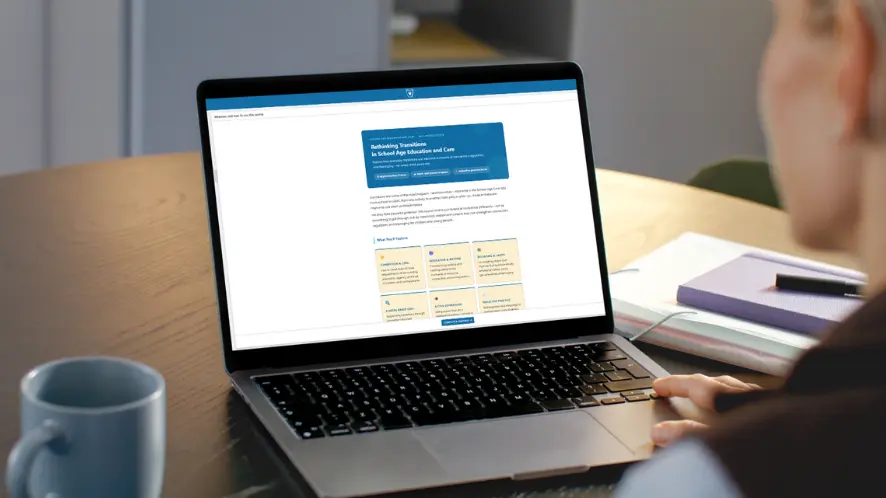
Online course option
Prefer to engage in this training from the comfort of your own home? We get it!
That's why we created the self-paced online course, with video content and downloadable workbooks.
More on heavy work and regulation
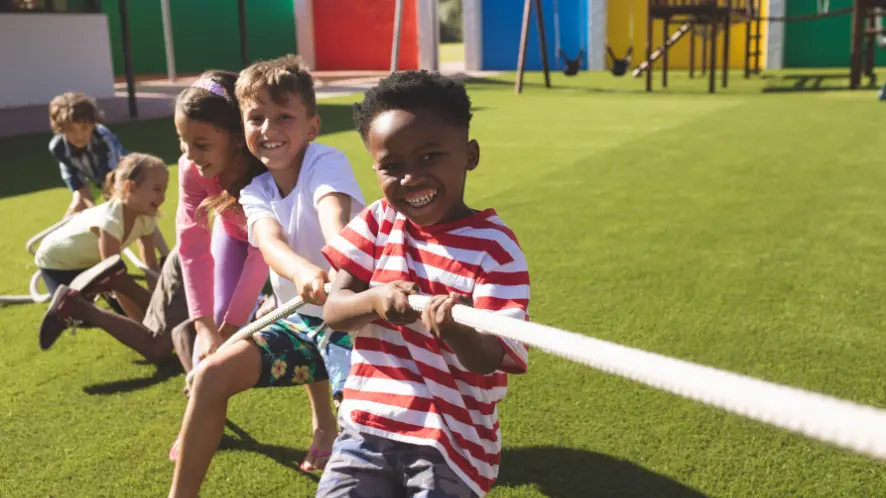
Interested in why some children and young people need to push, pull and crash? You can read all about it in our blog.