"Children can’t bounce off the walls if we take away the walls"
- Erin Kenny.
About
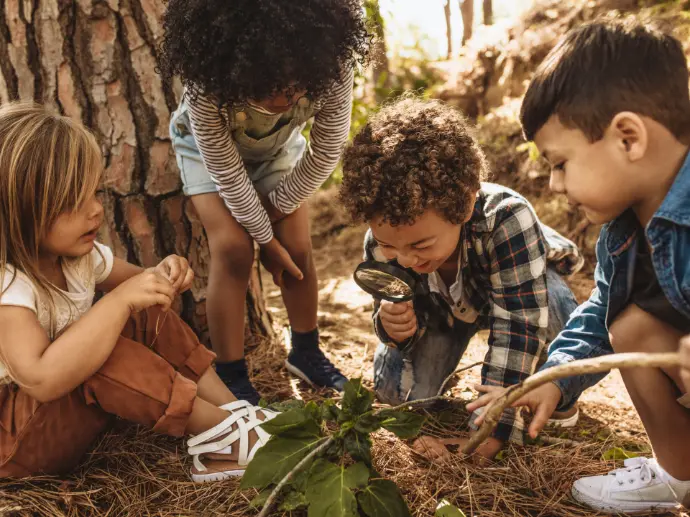
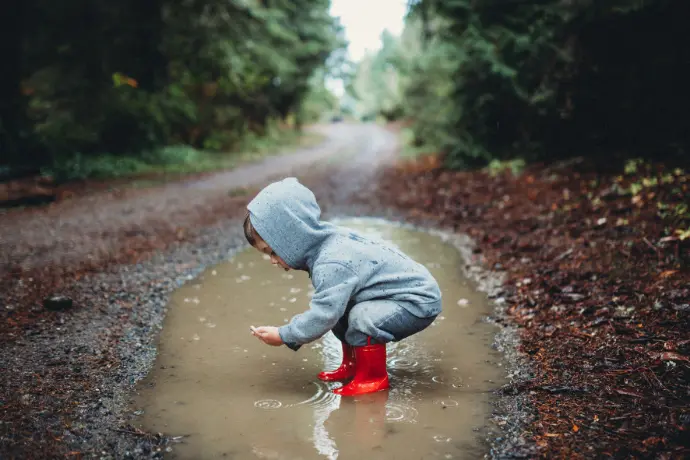
Pebbles, Puddles and Possibilities invites educators to reconnect with the magic, meaning and possibility of learning in nature. When children and young people engage with the natural world, they experience rich, embodied learning that supports wellbeing, curiosity, creativity and a deep sense of belonging.
Nature pedagogy is more than simply taking learning outdoors. It is an intentional, reflective approach that invites us to slow down, notice more deeply and design experiences that strengthen relationships, regulation, agency and joy. In this workshop, educators explore how natural environments can support meaningful learning across early childhood and school-aged care settings.
Grounded in contemporary research and aligned with the National Quality Framework, Pebbles, Puddles and Possibilities supports educators to embed nature-based learning in ways that are respectful of Country, responsive to community context and achievable within everyday practice
Download the full workshop brochure
See workshop overviews, learning focus, and delivery options in one clear, printable PDF.
We will
- explore how connection with nature supports children’s and young people’s learning, development and wellbeing
- examine the core principles of nature pedagogy, including research-informed considerations for designing high-quality nature play across age groups
- investigate authentic, place-based connections with Country that are locally relevant and culturally respectful
- explore adventurous and risky play in natural environments, including the use of meaningful risk–benefit analysis
- unpack STEAM learning in nature by identifying, extending and articulating learning in responsive, age-appropriate ways
- consider legislative requirements and key considerations for delivering programs in natural settings
- reflect on sustainability practices, site suitability and planning for in-nature programs
- engage in critical reflection around educator roles, supports and induction for confident, safe and effective in-nature practice
Participant Outcomes
Upon completing this course, participants will have:
- a clear understanding of the key principles and philosophy that underpin nature pedagogy across early childhood and school-aged care
- knowledge of respectful approaches for embedding First Nations perspectives and meaningful connections with Country
- practical strategies for supporting adventurous play in natural environments
- understanding of how to integrate STEAM learning through nature-based experiences
- clarity around supervision, safety and sustainability considerations for delivering in-nature programs
Theoretical underpinnings
Nature Connectedness Theory
Mariana Brussoni, Miles Richardson & Katherine Shanahan
Research on nature connectedness highlights three key influences on wellbeing: the type of experiences offered, how often children and young people engage with nature, and the time spent in natural environments. These perspectives position nature as an active context for learning, regulation and connection, rather than a one-off experience.
Nature Play and Social Development Theory
Helen Burgess & Julie Ernst
Research by Burgess and Ernst shows that children in nature-based programs demonstrate stronger peer interaction, collaboration and social play. Nature-rich environments create meaningful opportunities for shared problem-solving, cooperation and relationship-building.
Connection to Country and Spiritual
Wellbeing EYLF v2.0 & MTOP v2.0
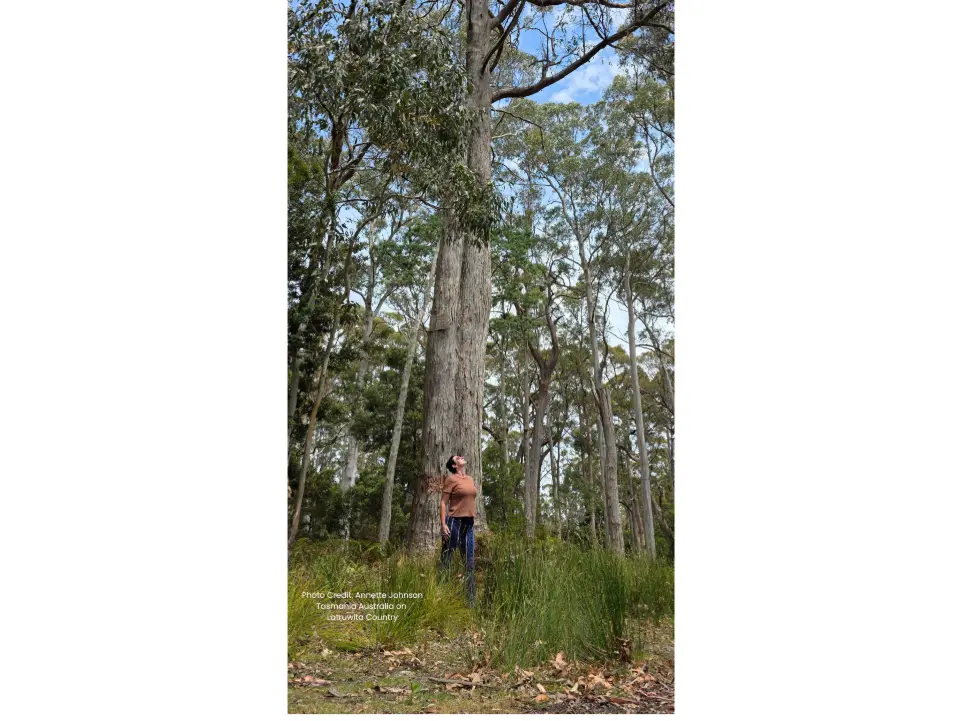
Both approved learning frameworks recognise the deep connection between Aboriginal and Torres Strait Islander peoples, Country and spirituality. Environments that reflect culture, identity and connection to land support children’s and young people’s sense of belonging, identity and wellbeing, making respectful, place-based connections to Country a key curriculum consideration.
Biophilia and Wellbeing Theory
Lisa Nisbet, John Zelenski, Frances Capaldi & Katie Pritchard
Theories of biophilia and nature connectedness suggest that humans have an inherent need to connect with the natural world. Research consistently links stronger connections with nature to increased happiness, vitality and emotional wellbeing, supporting nature as a protective factor for mental and emotional health.
National alignments
QA1: Program and practice (elements 1.1.2, 1.2.1, 1.2.3); supports children to plan for each child’s needs using intentionality around program design, respond positively to children's interests while fostering agency.
QA2: Children’s health and safety (element 2.2.1, 2.2.3); unpacks the legislative requirements for in nature programs including supervision and safety. The course strengthens educators skills at ensuring connections to Country are authentic and culturally relevant.
QA3: Physical environment (elements 3.2.1, 3.2.2, 3.2.3); builds educators capabilities to use natural resources in open ended ways to support learning, think critically about the inclusive needs of all children and support children to be environmentally responsible.
QA5: Relationships with children (element 5.1.1); the course provides clear actionable strategies for positively guiding children’s behaviour whilst fostering agency, wellbeing and safety.
QA6: Collaborative partnerships with families and communities (element 6.2.3); supports educators to consider natural spaces within their community, relevant cultural connections and opportunities for engagement with community organisations.
QA7: Effective leadership builds and promotes a positive organisational culture and professional learning community (element 7.1.2, 7.1.3, 7.2.1); encourages educators and leaders to critically reflect on induction requirements for educators involved within an in nature program.
Standard 1.1, 1.2, 1.4 – Know learners and how they learn: deepens understanding of positive impacts of nature connections on physical, emotional and spiritual wellbeing including authentic and culturally relevant connection to Country.
Standard 2.1, 2.4 - Know the content and how to teach it – strengthens capabilities to identify and scaffold learning in natural settings that consider Aboriginal and Torres Strait Islander cultural perspectives and languages.
Standard 3.2 – Plan for and implement effective teaching and learning: enhances intentional, responsive and developmentally informed practice.
Standard 4.4 – Create and maintain supportive and safe learning environments: builds relational strategies that promote safety, agency and emotional security.
Principle 1 – Child safety and wellbeing are embedded in organisational leadership, governance and culture. The course supports a culture where children’s needs, rights and wellbeing guide decision making.
Principle 2: Children and young people are informed about their rights, participate in decisions affecting them and are taken seriously. The course promotes children’s engagement in safety precautions such as risk benefit analysis.
Principle 4 - Equity is upheld and diverse needs respected in policy and practice. The course supports educators to work in child centric ways with specific consideration for fostering respectful approaches to Aboriginal and Torres Strait Islander perspectives
Principle 5 – People working with children are suitable and supported. Educators develop reflective, relational skills that strengthen safe, attuned practice.
Principle 8 - Physical and online environments promote safety and wellbeing while minimising the opportunity for children and young people to be harmed. The course covers the legislative requirements involved for in-nature programs including risk-benefit analysis and supervision.
Culturally safe, inclusive and responsive kindergarten programs
- Supports educators to create culturally safe places, work in intercultural ways through pedagogy and practice, engaging with Aboriginal and Torres Strait Islander peoples and embedding perspectives through pedagogy and practice.
Social & Emotional Skills
- Strengthens educator understanding of the emotional wellbeing benefits of nature connections
- Supports predictable yet flexible in nature programs where children feel secure and ready to engage.
Physicality
- Encourages appropriate risk taking and exploration fostering fine and gross motor coordination
- Links physical movement and sensory input with stress reduction and wellbeing, enhancing children’s readiness to participate.
Mathematics and numeracy
- Supports educators to plan for, identify and scaffold mathematics and numeracy through in nature programs
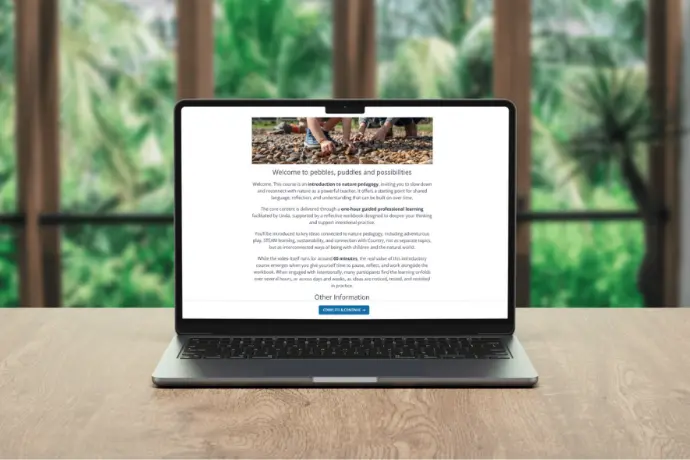
Online course option
Prefer to engage in this training from the comfort of your own home? We get it!
That's why we created the self-paced online course, with video content and downloadable workbooks.
More on nature play pedagogy
Interested in nature play pedagogy? You can read all about it in our blog.