Innovative Solutions Support for Early Childhood Services
Skip to Content


Innovative Solutions


When behaviour challenges your team, do your educators have a consistent approach for deciding how to respond?

Innovative Solutions Support projects for services across Australia, built around the barriers already named in your Strategic Inclusion Plan.

  Inclusion Development Fund

Funded Projects for Barriers Your Service Can't Shift Alone

Innovative Solutions Support is one stream of the Inclusion Development Fund, part of the Australian Government's Inclusion Support Program. It funds tailored projects that address barriers to inclusion your service cannot resolve on its own, and that sit beyond what your Inclusion Agency can provide directly.

What Projects Commonly Address

Behaviour that challenges educators, understood as a person's best attempt to meet a need with the skills they have available
Trauma-related behaviour, and the conditions that support children's regulation and mental health
Inconsistency, where educators are responding to the same child in different ways
Environments, routines and transitions that are making participation harder than it needs to be
Educational leadership capacity to hold the approach after the project finishes
1

Your service applies.

2

Your Inclusion Professional endorses the application.

3

The Inclusion Development Fund Manager assesses it.

If it is approved, the funding is paid to your service, and your service engages the support provider.

You choose the support provider. The guidance for services suggests looking at a provider's experience with the barriers you have named, whether they have worked on similar projects, how their values and approach fit your team, and how well they understand Innovative Solutions Support itself. Considering more than one provider is encouraged.

Our professional development catalogue and our coaching and mentoring work will give you a sense of the ground we cover and how we work. An Innovative Solutions project is built differently, from a separate library of sessions we hold for this funding, and the section below explains why. Throughout, the Phoenix Cups® Framework gives your team one shared language for the needs beneath behaviour, and you can meet the facilitators who deliver it before you decide.

Innovative Solutions Support is a national stream, separate from state funding. If you hold Kindy Uplift funding in Queensland or School Readiness Funding in Victoria, those are different programs with their own rules, and we work under both. A service can hold more than one.


  Working With Us

What a Project With Us Looks Like

You have already named the barriers in your Strategic Inclusion Plan. What the plan cannot give you is the time to work on them, or a person alongside your educators while they do. An Innovative Solutions project funds both.

We build the project around the barriers you have named. Professional development sessions deliver the content. Coaching follows on the floor, in your rooms, during operational hours, while your educators put the content into practice. Support tapers across the project, moving from active modelling toward observation and feedback, so your team is working independently before the project finishes.

Wherever possible, the facilitator who delivers your professional development also delivers your coaching. Nothing is lost between the room where the idea was introduced and the room where it has to work.
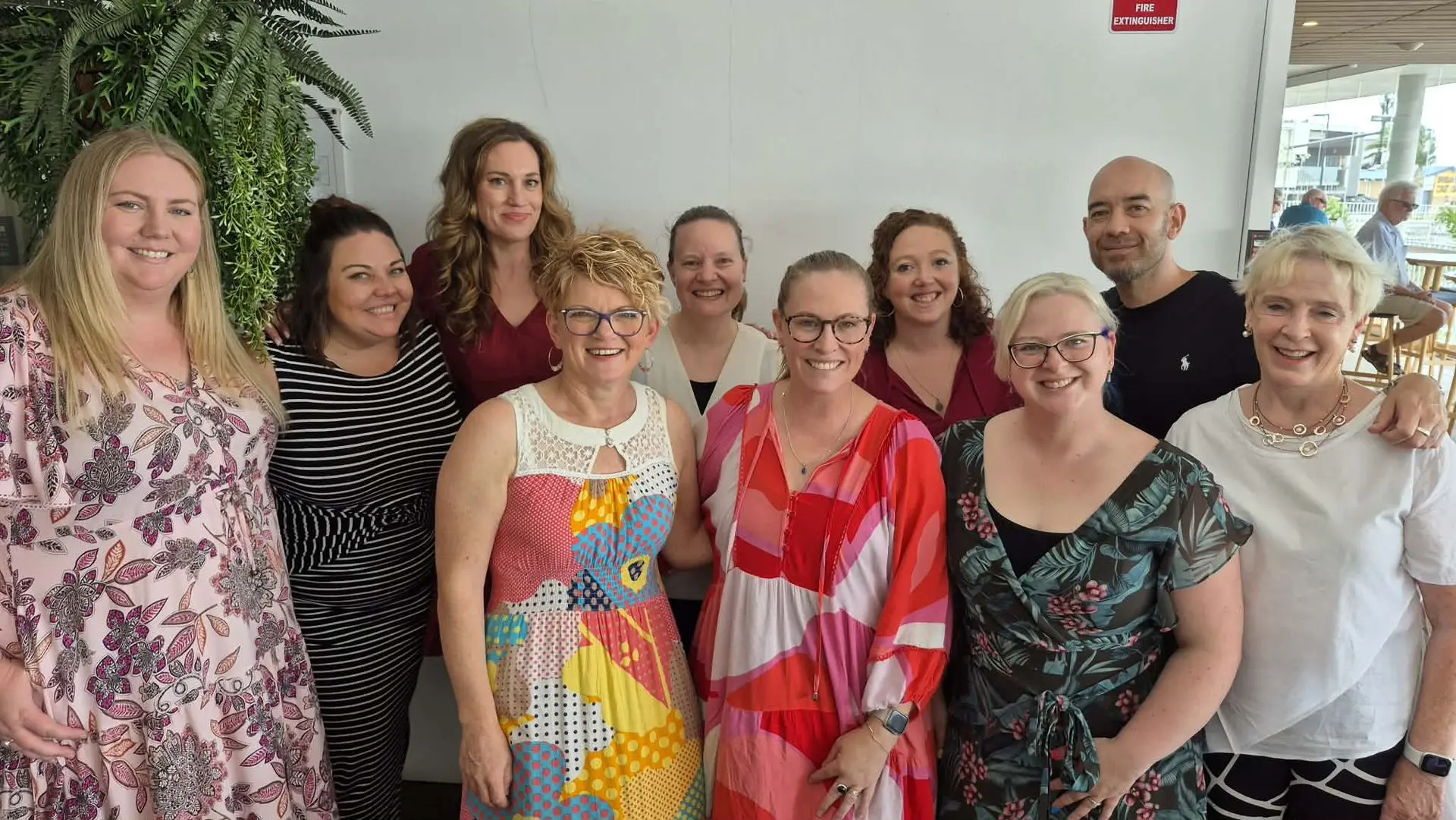
The Phoenix Support for Educators facilitator team
More than ten years in the education and care sector each, including at least five years in a leadership role
Qualifications in early childhood education, teaching, psychology, counselling or a related discipline
Working nationally across long day care, family day care, outside school hours care, kindergarten and preschool settings
  Real Results

What One Project Looked Like

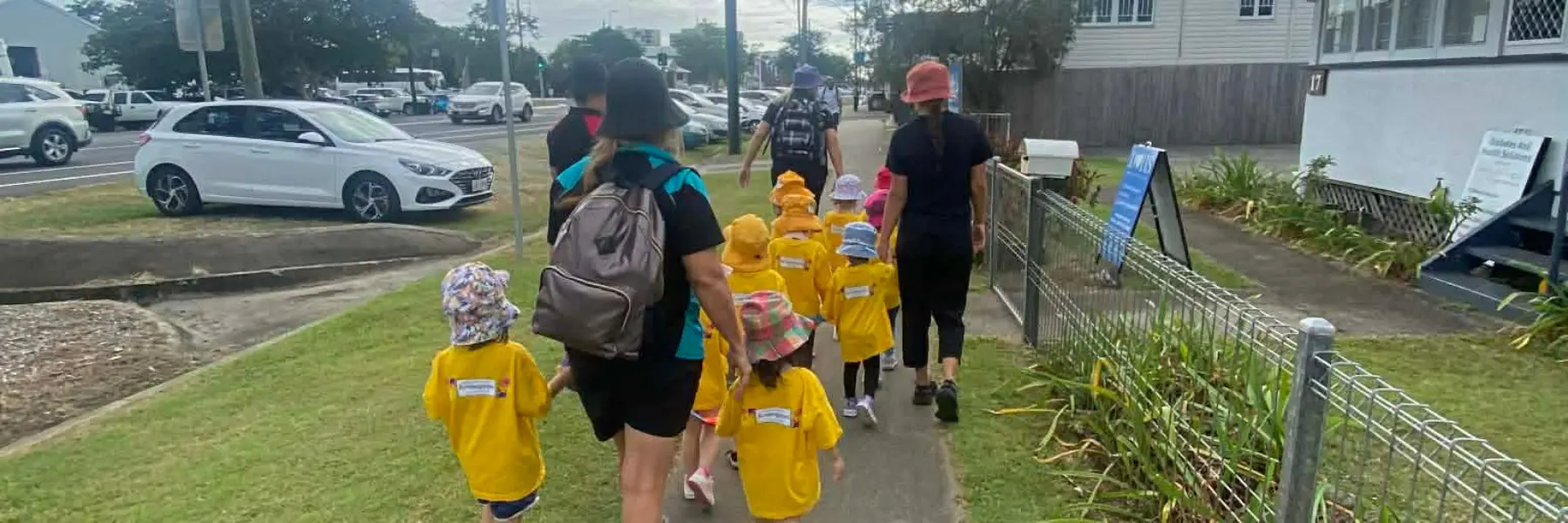
Educators and children from Water St Childcare and Kindergarten in Cairns walking together on an excursion

Water St Childcare and Kindergarten, Cairns

A long day care service that came out of its first assessment and rating visit not meeting Quality Area 5, specifically Element 5.2.2, self-regulation. Educators had strong relationships with children and were surprised by the result, but they were struggling with emotional outbursts, with following through, and with a child in foster care whose experience of trauma was testing a team holding 160 years of combined sector experience between them.

They went to their Inclusion Professional, applied for Innovative Solutions funding, researched providers and chose us. The project ran across four visits over twelve months. Afterwards their nominated supervisor wrote her own account of what the team changed and what it took, and we publish it in her words rather than ours.

Read the case study →

This reflection was written in 2022, so some of the program language has changed since. The work and the process are the same.

  Project Types

The Two Project Types We Deliver

There are five Innovative Solutions project types. We deliver two of them.

Guided Practice


Guided Practice combines content delivery with the practical support to put that content into practice. It is defined by the method rather than the topic, so it can address a wide range of inclusion barriers. It is the project type built for the way we work.

Sessions Built Around the Barriers You Named

We hold a separate library of sessions for Innovative Solutions projects. It sits apart from our public workshop catalogue. Those workshops are fixed programs, the same content and the same activities each time, which is what makes them good value when a service wants that workshop. An Innovative Solutions project asks for something different, so the material is broken down into shorter blocks, resequenced, and rebuilt around the barriers named in your Strategic Inclusion Plan.

That choice is structural. Funding is assessed on whether the project addresses the barriers your service has identified, so a session that would run identically at any service is harder to justify and easier to trim.

How a Project Is Sequenced

  A foundation session establishes one shared, needs-based understanding of behaviour across the whole team, so everyone is working from the same language before anything else is attempted.
  Content sessions follow, each a short block for the whole team, with coaching between them. They cover forming and testing a hypothesis about a child's unmet need, the quality of interactions and the adult's own regulation, designing environments and routines that make needs easier to meet, and trauma-informed practice where that is part of the picture.
  One session applies the framework directly to the barriers named in your Strategic Inclusion Plan, with your team working on the situations they are dealing with now.
  A consolidation session near the end documents what has changed, what still needs attention, who holds it, and how educators who join later will meet the approach.
  Where it helps, a facilitated whole-team session works through your team's own scenarios using the tools from a preceding session, and an evening session can extend the shared language to families.

Coaching and Mentoring Between the Content

Coaching is delivered on the floor, alongside educators while they are working with children. The facilitator observes the environment, the program and the interactions, then gives practical guidance as educators put the new approach into practice. That ranges from observation and feedback through to modelling a technique and real-time guidance, depending on how confident the educator is at that point. Each visit includes off-the-floor time to reflect on what happened and name what will change.

Mentoring is delivered off the floor, giving educators and your educational leader space to debrief, reflect and plan the next stage. The facilitator documents the takeaways and recommendations from each session, and those accumulate into a record your service keeps after the project ends.

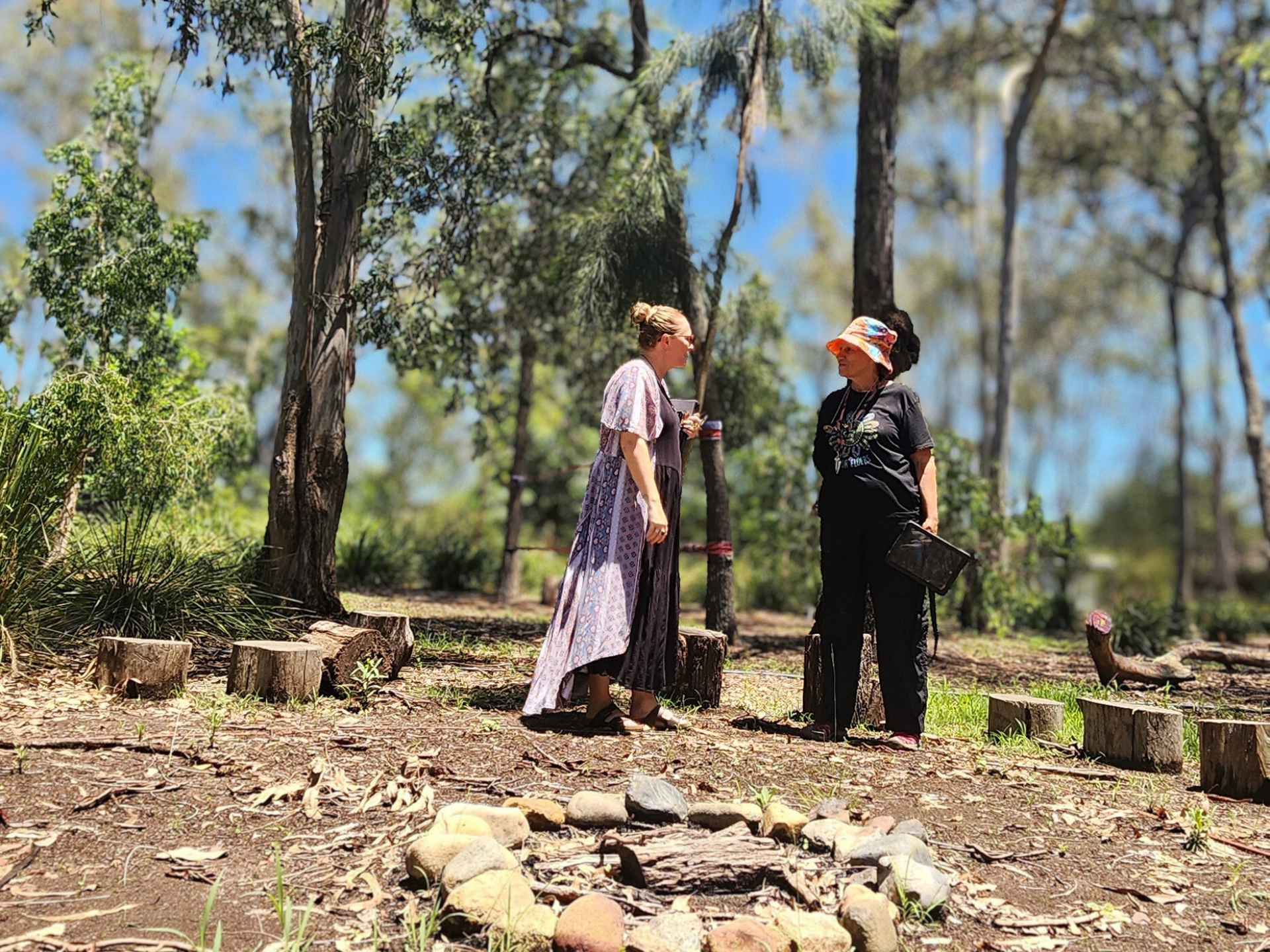
A Phoenix Support facilitator coaching an educator during a visit
A Phoenix Support facilitator coaching an educator outdoors at their service

Support tapers on purpose. Early visits involve more active modelling. Later visits move toward observation and feedback, so that by the end your educators are working without the facilitator in the room. The tapering is the mechanism that builds capacity rather than dependence.

Some content, some mentoring, mostly coaching. That is the balance the assessment looks for, and it is also the balance that changes practice. Content on its own tends to fade once the day gets busy.

Unique Projects


Unique Projects cover work that meets the criteria for Innovative Solutions Support without fitting one of the other four types, including projects that combine elements of several. They suit services with something specific in mind, and they suit groups of services with the same barrier who want to apply together.

Unique Projects carry a heavier explanation in the application, because each one is new. That is the part we can help with.

  Your Application

Your Application, With Our Sections Already Written

Most services have never written one of these applications, and the form asks for several things the support provider is meant to supply. We prepare all of them, so your team is not writing them from scratch at eleven at night.

A detailed financial quote. Itemised by support type, facilitator, hours and hourly rate, with travel and resources shown separately, matching the activities and hours in your Project Plan.
A Project Plan. Every visit set out with date, duration, support type, facilitator, participants and focus, so the assessor can see the quote and the plan correspond.
A Support Provider Statement. The facilitator's qualifications, relevant experience and expertise, written against the barriers your application names. The form invites you to attach this rather than describe us in your own words.
An evidence base statement. The theory and research behind the content we will deliver, named and attributed, ready to attach.
Session content descriptions. What each session covers, and what your educators will be able to do afterwards.
Children walking up a flight of stairs at an early learning service

We will also talk through your sustainability answer and your resource rationale with you, because those two are where applications are most often trimmed.

What Is in a Support Provider Statement


Two of the questions on the application form are about us rather than about you, and the form invites you to attach a statement from your provider instead of answering in your own words. We always supply one. This is what it contains.

About the Support Provider

Who we are, what we work on, and the settings we work across. Our practice is grounded in the National Quality Framework and in what quality practice looks like day to day, spanning inclusive practice, children's behaviour and development, educator wellbeing, and quality and compliance.

The Facilitator for Your Project

Named, with their qualifications and their relevant experience. Relevant experience is stated separately from total sector experience, because the funding defines the two differently and an assessor should be able to see the definition has been applied rather than assumed. A closing sentence connects that facilitator's expertise to the barriers your application names.

The Evidence Base for the Content

The theory and research behind what will be delivered, named and attributed. This is the section set out in full under Our evidence base further down this page.

How the Project Builds Inclusion Capacity

How content and coaching work together, how support tapers, and one sentence naming what your service will be able to do at the end of the project that it cannot do now.

The statement is completed for the facilitator on your project and signed by us. You attach it to your IS Case alongside the quote. It is one document, not a form for your team to fill in.

What stays yours. Your barriers, your context and your intended outcomes are yours to describe and yours to sign. Your Inclusion Professional endorses the application, and the Inclusion Development Fund Manager assesses it. We cannot lodge on your behalf, and no provider can tell you an application will be approved.

  Is This For You?

Is This the Right Route for Your Service?

It is likely a good fit if:

you have a current Strategic Inclusion Plan with barriers identified for the care environments involved
the barrier is about educator capacity, and the change you need is in how your team practises
you can release educators for coaching and reflection during the project
you want the change to hold after the project finishes

It is likely the wrong fit if:

  what you need is one-to-one support for a single child from an external person
  what you need is therapy or clinical assessment
  the support is available through another funding source

Your Inclusion Professional is the right person to confirm the fit, and to confirm your service has the capacity to carry a project right now. Talk to them early.

  How It Works

From First Conversation to Funded Project

1 Talk to your Inclusion Professional. They will help you confirm Innovative Solutions Support is the right form of support, work out which project type fits, and make sure your Strategic Inclusion Plan is current.
2 Talk to us. Tell us the barriers you have named and what you have already tried. We will tell you whether this is work we can do well.
3 We design the project together. Sessions, coaching visits, who is involved and over what period, shaped around your rooms, your rosters and your priorities.
4 We prepare your documents. The quote, the Project Plan, the Support Provider Statement and the evidence base statement, ready to attach.
5 You lodge the application. Your Inclusion Professional endorses it and it goes to the Inclusion Development Fund Manager through the IS Portal. Routine applications are assessed within 15 business days.
6 The project runs. Content first, then coaching, then tapering support as your educators take it on.
7 The change stays. Your educational leader holds the approach, your team holds a shared language for it, and new educators meet it through induction.
  Funding

What a Project Costs

$10,000

Excluding GST. Project quotes are typically under the maximum amount suggested.

Under 10% resources

The share of total project cost that can go to resources.

No minimum

And no limit on the number of applications a service can make.

Applications above that ceiling need a separate rationale and are approved only in exceptional circumstances, so we scope projects to fit inside it.

Your quote covers facilitator time for professional development, coaching and mentoring, along with travel where a facilitator is coming to you. Resources can be included where they are essential to the project.

Funding is paid to your service. Every project is quoted individually, because the hours, the travel and the facilitator all depend on what your project needs.

Ask us for a quote. Tell us the barriers and the shape of what you are thinking, and we will put a costed project in front of you.

Ask for a quote ↗
  For Inclusion Professionals

Bring Us In Early, Before Anything Is Written

If you are supporting a service to scope a project, we are happy to join a conversation early, before anything is written. We can talk through what a project might look like, flag where we think a different project type or a different provider would serve the service better, and give you a scope and an indicative cost to work with.

We supply the support provider documentation in full, written to the questions the application forms ask, which we hope makes the endorsement easier to write, and reflects us accurately as a provider.

We know the Guidelines well, and we have delivered well over 50 Innovative Solutions projects nationally. So when something in a service's plan looks like it will not meet the Guidelines, we say so early and point them back to you to check it before anything is lodged.

  Evidence Base

The Research Behind What We Deliver

The application asks which evidence-based practice approach a support provider draws upon. This is ours, and we supply it in writing so your service is not describing it in your own words.

Our professional development is grounded in humanistic and positive psychology, contemporary neuroscience, and trauma-informed practice. The core theoretical anchors are Self-Determination Theory (Ryan and Deci), which identifies autonomy, competence and relatedness as the conditions for motivation and wellbeing; the guidance approach to children's behaviour, articulated by Dr Louise Porter, Alfie Kohn and Dan Gartrell; the theory of constructed emotion (Lisa Feldman Barrett); allostatic load theory (Bruce McEwen), which integrates the physiological and psychological dimensions of safety; and Choice Theory (William Glasser). Ross Greene's position that children will do well when they can informs how educators are supported to respond.

We move away from behaviourist approaches to children's behaviour, including operant conditioning (B. F. Skinner). No session uses reward and consequence systems, and educators are supported to move away from them.

The Phoenix Cups Framework is the shared language we use to make this evidence base usable in daily practice. It describes five human needs: safety, connection, mastery, freedom and fun. The framework is the vehicle for the theory above rather than a replacement for it. It is one of the tools we draw on, rather than the whole of our approach.

Behaviour is framed throughout as a person's best attempt to meet a need, given the skills, experiences and capacities available to them at the time. Observed behaviour generates a hypothesis about an unmet need. It does not identify one, and educators are supported to hold that hypothesis lightly and check it.

All content aligns with the National Quality Standard, with Belonging, Being and Becoming: The Early Years Learning Framework for Australia V2.0 (AGDE, 2022), and with My Time, Our Place: Framework for School Age Care in Australia where appropriate.

National Alignments

What a Project Maps To


An Innovative Solutions project is assessed on inclusion outcomes and educator capacity, so these alignments differ from the ones on our other professional learning pages. Open an item below to see the detail.

Inclusion Support Program aims

The Inclusion Support Program states three things it supports services to do. A project is scoped and assessed against them.

Address barriers to inclusion

The project is built from the barriers already named in your Strategic Inclusion Plan, and the sessions are rebuilt around them instead of being selected ready-made.

Build capacity and capability to include all children

Coaching on the floor moves from modelling toward observation and feedback across the project, so the capability sits with your educators by the time the facilitator stops coming.

Implement quality, inclusive and equitable practices

A consolidation session records what changed, who holds it, and how educators who join later meet the approach, so the practice survives staff turnover.

The program's own stated aims sit behind those three: that all children, including those with additional needs, have the opportunity to learn and develop alongside their typically developing peers, and genuine opportunities to access, participate and achieve positive learning outcomes.

National Quality Standard

The Quality Areas an Innovative Solutions project most often moves. Element titles and descriptors are quoted from the National Quality Standard.

QA1 · Educational program and practice

ELEMENT 1.1.3 Program learning opportunities

All aspects of the program, including routines, are organised in ways that maximise opportunities for each child's learning.

Projects commonly work on the environments, routines and transitions that are making participation harder than it needs to be.

ELEMENT 1.2.2 Responsive teaching and scaffolding

Educators respond to children's ideas and play and extend children's learning through open-ended questions, interactions and feedback.

Coaching on the floor works directly on the quality of interactions, with modelling and feedback in the moment.

QA5 · Relationships with children

ELEMENT 5.1.1 Positive educator to child interactions

Responsive and meaningful interactions build trusting relationships which engage and support each child to feel secure, confident and included.

A shared, needs-based understanding of behaviour changes how educators read a child and what they do next.

ELEMENT 5.2.2 Self-regulation

Each child is supported to regulate their own behaviour, respond appropriately to the behaviour of others and communicate effectively to resolve conflicts.

Educators are supported to build the conditions for regulation rather than to respond to behaviour after it escalates.

QA6 · Collaborative partnerships with families and communities

ELEMENT 6.2.2 Access and participation

Effective partnerships support children's access, inclusion and participation in the program.

The project runs as a partnership between your service, your Inclusion Professional and us, with access and participation as the outcome it is assessed on.

ELEMENT 6.1.2 Parent views are respected

The expertise, culture, values and beliefs of families are respected and families share in decision-making about their child's learning and wellbeing.

Where a project includes an evening session, the shared language for children's needs extends to families as well as educators.

QA7 · Governance and leadership

ELEMENT 7.2.2 Educational leadership

The educational leader is supported and leads the development and implementation of the educational program and assessment and planning cycle.

Mentoring off the floor gives your educational leader the space to hold the approach, and the documented record to lead it after the project ends.

ELEMENT 7.2.3 Development of professionals

Educators, co-ordinators and staff members' performance is regularly evaluated and individual plans are in place to support learning and development.

Each visit produces documented takeaways and recommendations that accumulate into a record your service keeps.

Approved learning frameworks

Belonging, Being and Becoming: The Early Years Learning Framework for Australia V2.0 (AGDE, 2022). Principle and Practice names are quoted from the framework.

PRINCIPLE Equity, inclusion and high expectations

The principle an Innovative Solutions project exists to serve. The work targets the barriers standing between a child and full participation.

PRINCIPLE Secure, respectful and reciprocal relationships

Behaviour is approached through the relationship, with the adult's own regulation treated as part of the picture.

PRINCIPLE Critical reflection and ongoing professional learning

Coaching visits include off-the-floor time to reflect on what happened and name what will change.

PRACTICE Learning environments

Projects work on designing environments and routines that make needs easier to meet.

PRACTICE Responsiveness to children

Educators are supported to form and test a hypothesis about a child's unmet need, and to hold it lightly.

For outside school hours care settings, the same work is mapped to My Time, Our Place: Framework for School Age Care in Australia.

Disability Standards for Education and the Convention on the Rights of Persons with Disabilities

The Disability Standards for Education 2005 are made under the Disability Discrimination Act 1992 and bind preschools and kindergartens alongside every other education provider. Part titles are quoted from the Standards.

PART 3 Making reasonable adjustments

Building educator capability to adjust environments, routines and interactions is what a Guided Practice project does.

PART 5 Standards for participation

A project targets the specific conditions preventing a child from participating on the same basis as their peers.

PART 6 Standards for curriculum development, accreditation and delivery

Program and curriculum decisions are part of what the facilitator observes and works on with your team.

Australia has ratified the Convention on the Rights of Persons with Disabilities, whose Article 24 sets out the right to inclusive education with the supports needed to make it real.

Sources: National Quality Standard (ACECQA); Belonging, Being and Becoming: The Early Years Learning Framework for Australia V2.0 (AGDE, 2022); Inclusion Support Program, Australian Government Department of Education; Disability Standards for Education 2005.

  Contact Us

Ask Us About Innovative Solutions Support

Tell us the barriers you have named and what you have already tried. We will tell you whether an Innovative Solutions project is the right route, and if it is, what one would look like at your service.

  Other Project Types

What We Do Not Deliver

Cultural Mentoring calls for a mentor with connection to the specific cultural group, and for projects relating to Aboriginal and Torres Strait Islander cultures the mentor must be an Aboriginal or Torres Strait Islander person. Bilingual Support calls for a bilingual facilitator working in the child's first language. Specialised Training and Advice is for training in specific medical or care procedures, delivered by someone qualified or accredited in that condition.

Those three sit outside our expertise, and we will say so rather than stretch to fit. If a Guided Practice project would serve you better than the type you were considering, we will say that too.

Who We Would Point You To Instead

For Cultural Mentoring, these are both friends of Phoenix Support. We know both companies personally, and we know their Innovative Solutions work through references from services over many years.

Janice Rocca Consultancy

An Indigenous owned company providing tailored professional development, coaching and mentoring to build cultural competency. Janice Rocca, a descendant of Wakka Wakka and Kaanju Peoples, created the Raindrops of Diversity framework training for early childhood services with Michelle Raikuna-Jones of Kind-e-Play Consultancy.

Connecting the Dots through Culture

A consultancy dedicated to supporting educators, early learning services and organisations to authentically embed Aboriginal and Torres Strait Islander perspectives into everyday practice. Their on-site review of environments, resources and educator confidence produces a tailored support plan.

For Bilingual Support or Specialised Training and Advice, start with your Inclusion Professional. They will know who is working in your area and what the child in front of you needs.

  Contact Us

Ask Us About Innovative Solutions Support

Tell us the barriers you have named and what you have already tried. We will tell you whether an Innovative Solutions project is the right route, and if it is, what one would look like at your service.

Start the conversation

Contact us ↗
 

Or call us

1300 361 243