What does Coaching & Mentoring look like?
You know your service: which room is stretched, which educator is running low, which practice your team has talked about changing for a year without the space to do it. With a critical friend beside you in your own setting, over time, those changes take hold.
Your coach or mentor comes to you, observes practice in your rooms and listens before suggesting anything. Goals, focus areas and reflective questions are co-designed with your educators and leaders, grounded in your daily routines, your community and your Quality Improvement Plan priorities. The agenda is yours.
Coaching conversations go where your team needs them: curriculum and pedagogy, behaviour as a child's best attempt to meet a need, team dynamics, leadership and wellbeing. Your team leaves each session with a small number of practical ideas to try that week, sized to the day you have.
If you are new to the sector, you get a trusted mentor. If you are an experienced leader, you get a thinking partner who asks the questions that are hard to ask from inside your own team. If your team is ready to strengthen culture and practice, you get shared space for reflection, gentle challenge and growth.
Our coaches and mentors draw on positive psychology, strengths-based practice and the Phoenix Cups® Framework, and every package is shaped around your context and your priorities.

A Full Day, Side by Side With Your Team
A Coaching and Mentoring Day puts a PSFE facilitator on the floor with your educators for a whole day, working through real moments as they happen.
Mornings are spent alongside educators as they work with children: observing, offering feedback, and stepping in with hands-on modelling where it helps most. Afternoons move off the floor, giving your team time to debrief what came up, ask the questions a busy shift didn't leave room for, and plan the next practical step with your educational leader.
A single day suits a service wanting concentrated, in-person support on a specific challenge, without committing to a longer program. It's also a good way to test the fit before scoping something bigger together.
Investment: $1,788 + GST for the day, plus travel.
Ready to book a day for your service? Get in touch and we'll find a date.
Through coaching and mentoring, we will…
- work alongside you to co-design a tailored coaching and mentoring plan that reflects your service philosophy, community context and Quality Improvement priorities, with goals shaped by your real, day-to-day work.
- spend time in your learning environments, observing practice and offering in-the-moment support, modelling and feedback that strengthen confidence, capability and reflective decision-making.
- engage in ongoing reflective conversations, both one-on-one and in small groups, using thoughtful questions, shared inquiry and relevant resources to deepen insight into pedagogy, wellbeing, behaviour as an attempt to meet needs, and leadership.
- support you to set meaningful goals, track progress over time and notice growth as it unfolds, celebrating strengths and ensuring changes are sustainable, achievable and aligned with the National Quality Framework.
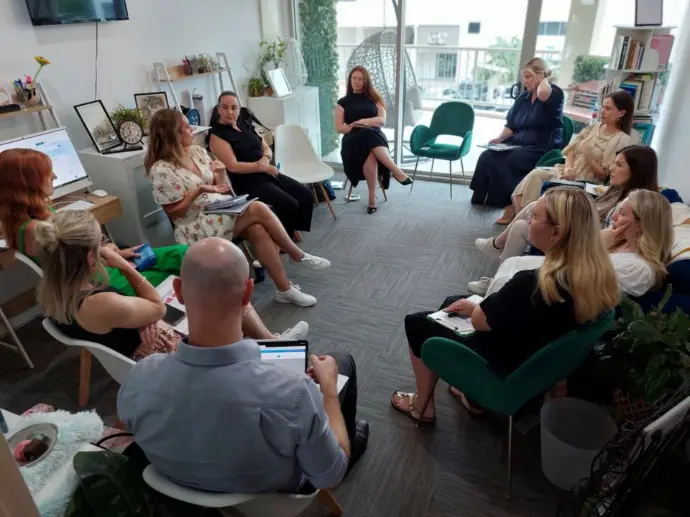

What educators and leaders gain
Through ongoing coaching and mentoring, participants experience:
- greater confidence in professional judgement and decision-making, with an increased capacity to respond to complex situations using calm, needs-based approaches.
- clearer insight into personal strengths, growth areas and professional goals, and how these connect to service philosophy and the Quality Improvement Plan.
- practical, research-informed approaches to curriculum planning, behaviour support, environment design and leadership.
- strengthened skills in critical reflection, including questioning assumptions, exploring multiple perspectives and translating insight into action.
- improved professional wellbeing, connection and satisfaction, contributing to stronger team culture and reduced burnout.
Is coaching right for your service?
Coaching and mentoring with Phoenix Support is designed for services that want professional learning to happen within the realities of daily practice.
Our coaches and learning facilitators can work with your team during operational hours, including when children are in attendance. This allows coaching to be embedded into real environments, relationships and routines, rather than removed from practice.
We offer in-service coaching and mentoring that supports educators and leaders through observation, modelling, reflective conversation and practical problem-solving, all tailored to your service context. This approach helps teams gain more from their professional learning by supporting sustained change, confidence and growth over time.
Coaching & Mentoring Packages
Bespoke packages to meet your needs.
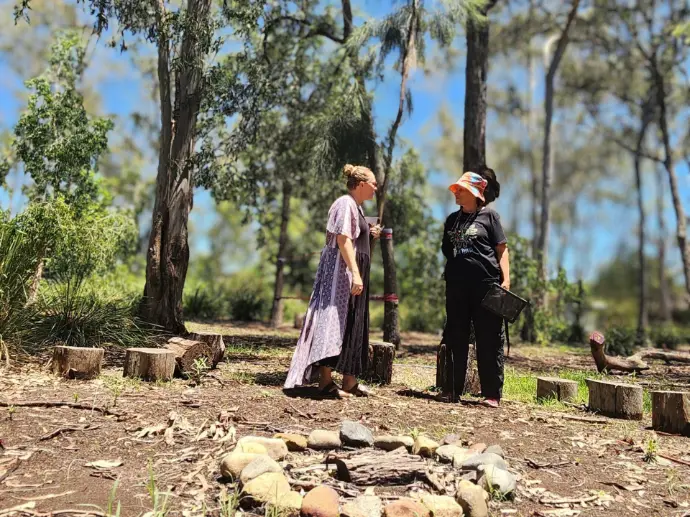
Hourly Face to Face
For as little as $298 per hour, you can connect with your coach and get started. These sessions can be delivered at your service (travel costs may apply) or via online zoom web meetings. Our facilitators are based in QLD, NSW, and VIC, and we all travel to all corners of Australia and beyond. (Yes, we also love to travel to rural and remote locations).
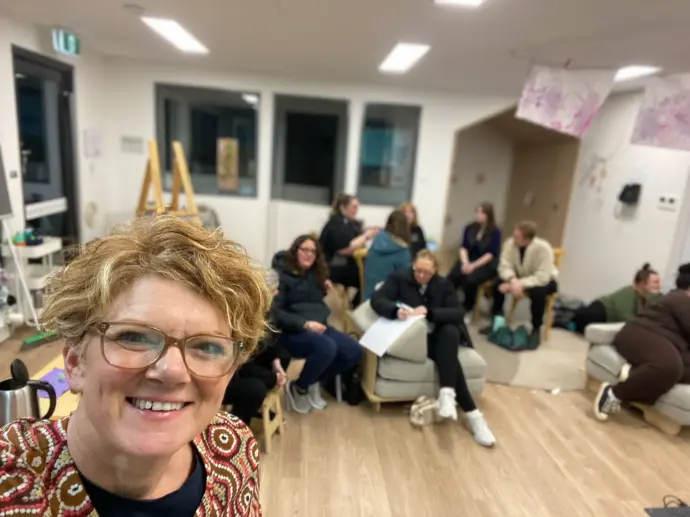
Intensive Quality Improvement Package
In this intensive package your coach becomes your critical friend. You'll build a productive and supportive relationship and share goals for your service over a long term support period. 3 months? 6 months? 12 months? It's up to you. Together, you'll develop Quality Improvement Plan actions, and at the conclusion of the package, your coach will provide you with a thorough QIP report.
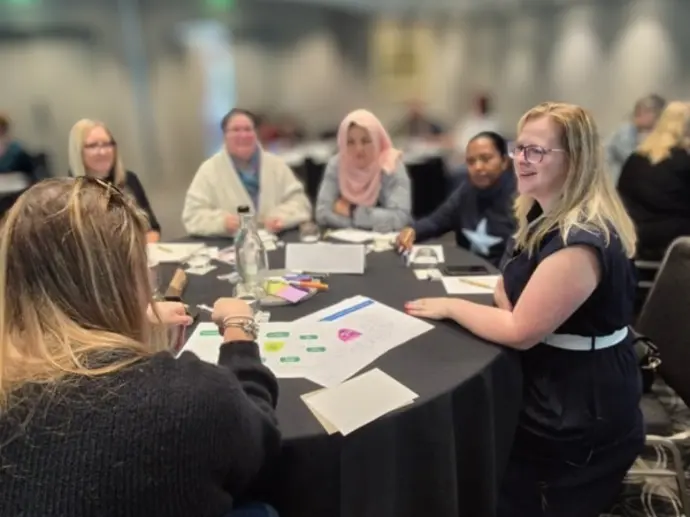
Professional Conversations
In addition to coaching and mentoring, your coach can facilitate whole team staff meetings with transformative professional conversations. Bring your team together to deep dive into reflective conversations led by our strength based facilitators. We bring ideas from solution focused practice, strength based practice, and positive psychology to ensure your staff meetings bring out the very best in your team.
How our coaching works in practice
Our coaching packages take into consideration research around effective coaching programs.
Observation and Feedback
Your coach will visit you in your day to day setting to observe practices and provide on the spot feedback, as well as written feedback in the form of Quality Improvement Plan Actions.
Goal Setting
You will develop goals with your coach, who will check in and help you measure, track, and celebrate your achievements.
Reflection
Your coach will guide and support your critical reflection by posing useful questions and providing relevant readings and activities.
Theoretical underpinnings
Phoenix Cups Framework
Sandi & Chris Phoenix
Positions behaviour (children’s, young people's and adults’) as the best attempt to meet needs at the time, shaping coaching that supports needs-meeting environments, relational leadership and cup-filling cultures.
The Strengths Approach
Wayne McCashen
Our coaching and mentoring is grounded in strengths-based approaches, using ‘power-with’ relationships as equal partnership and the mobilisation of educators’ existing strengths to build hope, confidence and sustainable, positive change.
Self-Determination Theory
Ryan & Deci
Emphasises autonomy, competence and relatedness as core human needs, guiding coaching conversations that honour educator voice, build skill and strengthen relationships.
Positive Psychology
Martin Seligman & Mihaly Csikszentmihalyi
Coaching focuses on strengths, wellbeing and flourishing, not deficits, aligning professional growth with what energises and sustains educators, and creating supportive relationships where hope, motivation and meaning become the drivers of lasting change.

National alignments
QA1 – Educational Program and Practice (Elements: 1.1.1, 1.2.1, 1.2.3)
- Strengthens educators’ capacity to design responsive, intentional programs through reflective conversations, observation and tailored feedback.
- Supports teams to embed guidance-oriented, needs-based approaches that enhance children’s learning, engagement and wellbeing.
QA2 – Children’s Health and Safety (Elements: 2.1.1, 2.2.1, 2.2.2)
- Helps educators create emotionally and physically safe environments through flexible, calm, predictable and individualised rhythms and rituals, and attuned, relational practice.
- Builds confidence in recognising dysregulation, regulation needs and risk factors in everyday environments.
QA3 – Physical Environment (Elements: 3.1.1, 3.2.1, 3.2.2)
- Supports educators to design learning environments that are welcoming, flexible and aligned with children’s sensory, regulatory and developmental needs.
- Encourages reflective review of indoor/outdoor flow, materials, spaces for retreat and opportunities for autonomy.
QA4 – Staffing Arrangements (Elements: 4.1.1, 4.2.1, 4.2.2)
- Enhances collaboration, communication and role clarity through strengths-based coaching conversations and team-wide reflective practice.
- Supports leaders to cultivate psychologically safe teams where educators feel valued, capable and connected.
QA5 – Relationships with Children (Elements: 5.1.1, 5.1.2, 5.2.1
- Builds educator confidence in forming secure, respectful and reciprocal relationships grounded in co-regulation and attuned interactions.
- Strengthens practice that sees behaviour as an expression of needs, allowing educators to respond with empathy and intentionality.
QA6 – Collaborative Partnerships with Families and Communities (Elements: 6.1.1, 6.2.1, 6.2.2)
- Supports educators to communicate with families confidently and respectfully, sharing insights and strategies in ways that build trust.
- Helps services align their practice with community needs, culture and strengths through place-based coaching.
QA7 – Governance and Leadership (Elements: 7.1.2, 7.2.1, 7.2.3)
- Strengthens leadership capacity in continuous improvement, reflective supervision and embedding the service philosophy into everyday practice.
- Supports leaders in developing meaningful QIP goals, monitoring progress and sustaining change through power-with relationships.
Standard 1.2 - Know learners and how they learn: deepens understanding of children’s needs, motivations and wellbeing through reflective conversations about real practice.
Standard 3.5 – Use effective classroom strategies: supports educators to trial, refine and reflect on guidance-oriented, needs-based strategies in their everyday environments.
Standard 4.1 – Support student participation: promotes inclusive, strengths-based approaches that enable all children to participate meaningfully.
Standard 6.2 – Engage in professional learning and improve practice: embeds ongoing, targeted coaching as a vehicle for sustained professional growth.
Standard 6.3 – Engage with colleagues and improve practice: strengthens collaborative cultures by supporting educators to reflect together, share insights and collectively consider.
Standard 7.4 – Engage with professional teaching networks and broader communities: connects educators with Phoenix Support’s wider community of practice and resources.
Principle 1 – Child safety and wellbeing are embedded in organisational leadership, governance and culture: Coaching supports leaders to align policies, practice and culture with children’s rights, needs and safety at the centre.
Principle 5 – People working with children are suitable and supported: Offers educators confidential, supportive spaces to reflect on their practice, stress levels and learning needs, enhancing suitability and safeguarding.
Principle 7 – Staff are equipped with the knowledge, skills and awareness to keep children safe: Builds capability in recognising risk, responding to concerns and creating emotionally safe environments.
Principle 8 – Physical and online environments minimise the opportunity for harm: Helps teams review supervision, environment design and decision-making through a child-safe, needs-based lens.
Culturally safe, inclusive and responsive kindergarten programs
- Supports place-based planning and leadership that responds to local strengths, vulnerabilities and priorities.
Equity and Access for all
- Helps leaders and teams identify barriers to participation and co-create strategies that promote genuine inclusion.
Social and emotional learning
- Strengthens educator understanding of their own and children’s needs, stress responses and wellbeing, using the Phoenix Cups Framework as a shared language.
- Builds capacity in co-regulation, relational safety and guidance-based strategies, with flow-on benefits for children’s social and emotional competence.
- Supports teams to plan predictable routines and emotionally literate environments where children feel safe enough to explore and relate.
Executive function
- Helps educators design daily rhythms, transitions and environments that reduce unnecessary stress and support children’s focus, working memory and self-control.
- Supports reflective planning of experiences that scaffold turn-taking, problem-solving and flexible thinking through play.
Language and literacy
- Encourages rich, attuned conversations between adults and children by building educator confidence, presence and responsiveness.
- Supports educators to intentionally embed storytelling, conversations and vocabulary-building opportunities within everyday routines and play.
Access & Inclusion
- Supports leaders and educators to reflect on structural, cultural and relational factors that affect children’s access to meaningful participation.
- Co-constructs strategies for inclusive environments and practices that respond to diverse abilities, cultures and family circumstances.
Communication (language, literacy and numeracy)
- Helps educators refine their own communication styles, including “say what you see, ask a question” and other attuned approaches that invite dialogue.
- Encourages language-rich interactions, shared book reading and conversational turn-taking embedded in everyday routines.
Wellbeing (Social & Emotional)
- Strengthens educators’ understanding of their own Cups profiles and stress patterns, supporting sustainable, wellbeing-focused practice.
- Builds guidance-oriented approaches to children’s behaviour that prioritise co-regulation, emotional literacy and needs-meeting environments.
Ask us about Coaching and Mentoring
Let’s talk about what support would be most helpful for your team and your context.
If you have already booked a coaching and mentoring session with us, and your professional learning date is approaching, this information is for you!
What to expect from coaching and mentoring
There is no “typical” coaching and mentoring day. Each visit is shaped by your service context, team needs and priorities, and is designed to feel supportive, responsive and purposeful rather than prescriptive.
Your facilitator will tailor support throughout the visit based on observations, conversations with educators and leaders, and your Quality Improvement priorities. Coaching may include in-the-moment feedback, reflective questioning, modelling and practical problem-solving grounded in your everyday practice.
Time is spent in learning environments observing programs, curriculum decisions and interactions. Verbal feedback and advice are provided to educators and leadership as part of reflective conversations.
If preferred, time can also be scheduled during the visit for written QIP recommendations. Written feedback is optional and always discussed collaboratively. The amount of written reflection provided depends on the time allocated on the day.
Coaching happens in real contexts. Facilitators may observe practice, discuss challenges with key staff and role-model strategies where helpful. Educators are welcome to ask questions and explore challenges as they arise.
Visits can be as structured or as fluid as you prefer. Some services choose to timetable focus areas or environment visits, while others value a more organic, responsive approach. Your facilitator will work with you on the day to ensure the time feels manageable and meaningful.
A planning template is available if you wish to outline priorities or a preferred structure ahead of the visit.
An Important Note About Safety and Supervision of Children
Educators will have the opportunity to ask questions and discuss challenges in a one-on-one coaching conversation with facilitator at any time during this day. If the educator is counted in educator:child ratio at the time, they might want to get into a deeply involved conversation with the facilitator, but will also need to be mindful of the active supervision of children.
We strongly recommend planning for an additional staff member to be available on the day to maximise the time that the facilitator is visiting the learning environments. This allows for the lead educator or other staff to have focused conversations with facilitator. This also ensures that the need for active supervision of children does not impact on your professional learning opportunity.
In the event that you are unable to staff above educator:child ratio on the day, please be aware that educators who are supervising children will need to be actively supervising, and it is the responsibility of each educator and the nominated supervisor to ensure active supervision occurs while having discussions with your facilitator.
Please also note that facilitators are not to be included within the educator : child ratio under any circumstances. Additionally, facilitators are not to be expected to supervise children, or be left alone with children at any time. For the purpose of definition, "left alone with children", means to be out of ear shot and / or eye line of a supervising educator.
Preparing for Your Coaching and Mentoring Visit
Find everything you need to know to support your upcoming session and download this 'What to expect' information as a PDF to share to your team