About
Deep Dive into the Safety Cup® supports educators to develop a clear, practical understanding of how children and young people experience and seek safety across educational contexts.
Grounded in the Phoenix Cups® Framework and contemporary neuroscience, the workshop explores how physiological and psychological needs for security, predictability, rest, nourishment, movement, sensory regulation and trust shape behaviour, wellbeing and learning. Educators are invited to consider safety not as compliance or control, but as a felt experience that is built through relationships, environments and everyday interactions.
The session examines the neuroscience of emotion and the role of sensory development, routines, transitions, movement and emotional literacy in supporting children and young people to feel safe. Through real scenarios and practical strategies, educators learn to recognise the Will to Fill™ and intentionally build the Skill to Fill™ in ways that uphold children’s rights while supporting the needs of others.
This reflective workshop encourages educators to reimagine environments, routines, transitions and interactions as opportunities to strengthen trust, stability and resilience. Participants leave equipped to create predictable, nurturing and flexible spaces where children and young people feel safe to engage, learn, play and thrive.
We will
- explore the Safety Cup® through the Phoenix Cups® Framework, examining how physiological, emotional, sensory and relational needs influence behaviour, wellbeing and learning for children and young people.
- engage with real scenarios, videos and workbook activities to identify low Safety Cups and practise responsive, evidence-informed strategies that honour safety needs and children’s rights.
- examine theory, neuroscience and sensory development to understand how emotions are formed, why predictability matters, and how routines, transitions, relationships and environments support felt safety.
- participate in shared reflection and problem-solving to plan how Safety Cup® strategies, trust-building and predictability can be intentionally embedded into everyday practice across early learning, outside school hours care and school-aged contexts.


Participant outcomes
By the end of this workshop, participants will have:
- develop a deep understanding of the Safety Cup®, and how physiological, emotional and sensory needs shape children and young people’s sense of safety and security.
- feel confident recognising when a Safety Cup® is low or empty, and responding with attuned, predictable and relational approaches that support felt safety.
- gain confidence in designing environments, routines, transitions and rituals that balance structure with flexibility, building trust and stability.
- strengthen their skills in supporting emotional literacy, co-regulation and resilience, informed by contemporary neuroscience and sensory development.
- build capacity to support children and young people to develop the Skill to Fill™ their needs in ways that are considerate, cooperative and respectful of rights.
Theoretical underpinnings
Theory of Constructed Emotion
Dr Lisa Feldman Barrett
The workshop draws on Barrett’s research that emotions are constructed, not innate. This underpins our focus on teaching emotional literacy, supporting sensory awareness, and creating environments that help children interpret and regulate their experiences and responses.
Paediatric Occupational Therapy
Angela Hanscom
Children and young people’s sensory, movement and play needs are essential for healthy development, focus and emotional regulation. Children and young people seek physical input to feel grounded and secure, directly supporting the filling of their Safety Cup.
Self-Determination Theory
Ryan & Deci
Self Determination Theory highlights children and young people’s basic psychological needs for autonomy, competence, and relatedness. A full Safety Cup supports relatedness and physiological security, which are foundational for children and young people’s wellbeing and capacity to learn.
Young Minds Matter
Australian Government Department of Health
Many young children experience significant emotional, behavioural and developmental challenges, with anxiety, attention difficulties and early signs of stress emerging far earlier than previously recognised.

National alignments
QA1 – Educational Program and Practice (Element 1.1.3): Strengthens predictable, responsive routines and transitions that maximise children’s security and learning.
QA2 – Children’s Health and Safety (Elements 2.1.1, 2.1.3): Deepens educator capability to meet children’s needs for rest, sleep, nutrition, physical activity and emotional wellbeing.
QA5 – Relationships with Children (Element 5.1.1): Promotes trust-building, stability and relational approaches that enhance children’s sense of safety and belonging.
Standard 1.1 – Physical, social and intellectual development: Develops understanding of how physiological, sensory and emotional needs impact behaviour and learning.
Standard 1.2 – Know learners and how they learn: Strengthens educators’ ability to identify signs of unmet safety needs and respond with evidence-informed strategies.
Standard 4.1 – Support student participation: Builds skills to create predictable, supportive environments where all children feel safe to engage.
Principle 1 – Child safety and wellbeing are embedded in organisational culture: Supports environments where children’s physical and psychological safety guide decisions.
Principle 2 – Children are safe, informed and participate: Helps children express needs, understand emotions, and participate in routines with agency and predictability.
Principle 3 – Families and communities are informed and involved: Strengthens communication around sleep, nutrition, sensory needs and wellbeing.
Principle 5 – People working with children are suitable and supported: Develops educators’ capacity to provide attuned, consistent and safe relational practice.
Principle 6 – Processes for complaints and concerns are child-focused: Promotes needs-based responses to behaviour and distress.
Culturally Safe, Inclusive & Responsive Programs
- Promotes predictable, trusting relationships that honour children’s backgrounds and lived experiences.
- Ensures all routines, rhythms and rituals including sleep, food and transitions, reflect the child first and consider family, cultural and individual needs.
- Strengthens respectful communication and safe participation.
Social and Emotional Learning
- Builds educator confidence in co-regulation and emotional literacy.
- Strengthens children’s resilience, trust and sense of security.
- Supports predictable yet flexible spaces where children can manage emotions safely.
Physicality
- Highlights movement, proprioception, vestibular play and active learning for regulation.
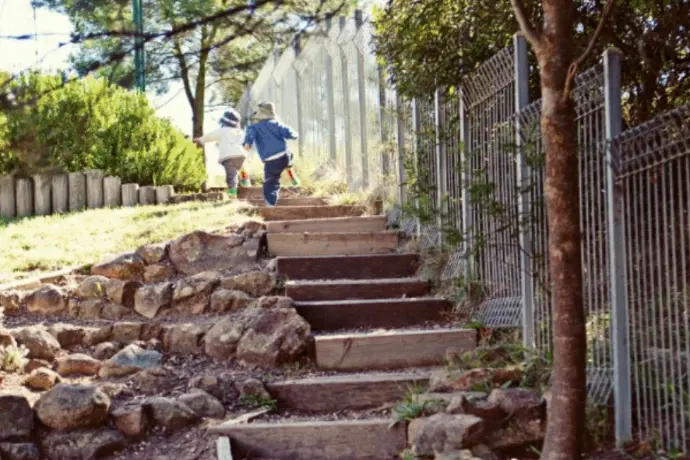
- Promotes environments that allow children to climb, balance, run and explore safely.
Executive Function
- Supports play, predictability and calm environments that reduce cognitive load.
- Builds children’s ability to plan, wait, organise, transition and regulate.
Mathematics & Numeracy
- Supports predictable rhythms, sequences and routines, helping children understand order, time and pattern.
Access & Inclusion
- Promotes equitable access to rest, movement, nutrition, sensory supports and emotional safety.
- Reduces barriers for children experiencing anxiety, dysregulation or unpredictability.
- Builds educator capacity for inclusive, needs-led responses.
Communication (language, literacy and numeracy)
- Enhances emotional vocabulary and children’s ability to express needs.
- Strengthens serve-and-return communication through trust and attunement
Wellbeing (Social & Emotional)
- Builds skills in co-regulation, emotional literacy, resilience and trust.
- Helps educators identify unmet needs and respond with relational, predictable strategies.
Online Course Option
Prefer to engage in this training from the comfort of your own home? We get it!
That's why we created the self-paced online course, with video content and downloadable workbooks.
Get in touch with us for a quote for this workshop!
Join us for an insightful workshop where professional expertise meets a compassionate understanding of children’s needs. Transform your ability to create nurturing, safe environments that ensure every child's Safety Cup is full!