
Quality Area 1: Educational program and practice
Quality Area 1 is about what children do and learn each day, and how educators decide what comes next.
Standard 1.1: Program
The educational program enhances each child's learning and development.
Start with this one
Think of one child in your room. What do you know about them that never makes it into their documentation?
More questions for Standard 1.1
- Which part of our program did a child shape this week?
- When a routine runs long, what do children lose and what do they gain?
- Where do we give children time to go deep, and where do we hurry them along?
- When we plan, how do we use our learning framework, and when do we reach for it only to write up?
- Which child's strengths are not yet visible in our program?
The elements of Standard 1.1
Element 1.1.1Approved learning framework
Curriculum decision-making contributes to each child's learning and development outcomes in relation to their identity, connection with community, wellbeing, confidence as learners and effectiveness as communicators.
Element 1.1.2Child-centred
Each child's current knowledge, strengths, ideas, culture, abilities and interests are the foundation of the program.
Element 1.1.3Program learning opportunities
All aspects of the program, including routines, are organised in ways that maximise opportunities for each child's learning.
Standard 1.2: Practice
Educators facilitate and extend each child's learning and development.
Start with this one
When did you last change your plan because of something a child said or did?
More questions for Standard 1.2
- What does intentional teaching look like in the most ordinary part of our day?
- Which of the questions we ask children have more than one good answer?
- When a child chooses something other than our plan, what do we do first?
- Which choices do children make every day, and which do we still make for them?
- How do we decide when to step in and when to step back?
The elements of Standard 1.2
Element 1.2.1Intentional teaching
Educators are deliberate, purposeful, and thoughtful in their decisions and actions.
Element 1.2.2Responsive teaching and scaffolding
Educators respond to children's ideas and play and extend children's learning through open-ended questions, interactions and feedback.
Element 1.2.3Child directed learning
Each child's agency is promoted, enabling them to make choices and decisions that influence events and their world.
Standard 1.3: Assessment and planning
Educators and co-ordinators take a planned and reflective approach to implementing the program for each child.
Start with this one
If a family read our documentation tonight, what would they learn about how their child thinks?
More questions for Standard 1.3
- At which point in our cycle does reflection happen, and who joins it?
- Which observation changed what we did next?
- Which part of our documentation does the most work for children, and which part mainly fills a page?
- How do families add to what we know about their child, and what do we do with it?
- How do we decide what is worth documenting and what we let go?
The elements of Standard 1.3
Element 1.3.1Assessment and planning cycle
Each child's learning and development is assessed or evaluated as part of an ongoing cycle of observation, analysing learning, documentation, planning, implementation and reflection.
Element 1.3.2Critical reflection
Critical reflection on children's learning and development, both as individuals and in groups, drives program planning and implementation.
Element 1.3.3Information for families
Families are informed about the program and their child's progress.
Quality Area 2: Children's health and safety
Quality Area 2 asks how we keep every child healthy, rested, and safe, and how we know our precautions are working.
Standard 2.1: Health
Each child's health and physical activity is supported and promoted.
Start with this one
Where in our day does a child's need for rest, food, or movement come second to the schedule?
More questions for Standard 2.1
- How do we notice a child who is tired, hungry, or unwell before they can tell us?
- What does rest look like for a child who does not sleep?
- Which hygiene habits do children see us model, and which do they see us skip?
- What do children eat and drink with us, and what do they learn about food from the way we do it?
- How much do children move across a day, indoors and out, and who moves least?
The elements of Standard 2.1
Element 2.1.1Wellbeing and comfort
Each child's wellbeing and comfort is provided for, including appropriate opportunities to meet each child's need for sleep, rest and relaxation.
Element 2.1.2Health practices and procedures
Effective illness and injury management and hygiene practices are promoted and implemented.
Element 2.1.3Healthy lifestyle
Healthy eating and physical activity are promoted and appropriate for each child.
Standard 2.2: Safety
Each child is protected.
Start with this one
Walk through your space as a visiting child would. Which risk have you stopped seeing?
More questions for Standard 2.2
- Where are the blind spots in our supervision, and who covers them?
- When did we last practise an emergency, and what did we change afterwards?
- What does every person on our team do the moment they are worried about a child's safety?
- Who could a child tell if something felt wrong, and how would the child know that?
- How do we welcome visitors, contractors, and new staff while keeping children safe?
The elements of Standard 2.2
Element 2.2.1Supervision
At all times, reasonable precautions and adequate supervision ensure children are protected from harm and hazard.
Element 2.2.2Incident and emergency management
Plans to effectively manage incidents and emergencies are developed in consultation with relevant authorities, practised and implemented.
Element 2.2.3Child safety and protection
Management, educators and staff are aware of their roles and responsibilities regarding child safety, including the need to identify and respond to every child at risk of abuse or neglect.
Quality Area 3: Physical environment
Quality Area 3 looks at the spaces children use, and whether they are safe, welcoming, and rich with things to explore.
Standard 3.1: Design
The design of the facilities is appropriate for the operation of a service.
Start with this one
If a child with different movement or sensory needs joined us tomorrow, which part of our space would get in their way?
More questions for Standard 3.1
- What do we check, how often, and where is it written down?
- Where do children find privacy, and where do educators keep a clear view?
- How well does our space work at our busiest time of day?
- Which fixtures or furniture have we outgrown?
- How do arrival and departure feel for children, families, and educators?
The elements of Standard 3.1
Element 3.1.1Fit for purpose
Outdoor and indoor spaces, buildings, fixtures and fittings are suitable for their purpose, including supporting the access of every child.
Element 3.1.2Upkeep
Premises, furniture and equipment are safe, clean and well maintained.
Standard 3.2: Use
The service environment is inclusive, promotes competence and supports exploration and play-based learning.
Start with this one
Crouch to a child's eye level in each of our spaces. Which one makes you want to stay?
More questions for Standard 3.2
- Which of our resources get used in many ways, and which in only one?
- Where can children reach natural materials and the outdoors every day?
- What do our spaces say about whose culture belongs here?
- What do we hold back from children that they could safely handle?
- How do children help care for our environment, and what do they learn from it?
The elements of Standard 3.2
Element 3.2.1Inclusive environment
Outdoor and indoor spaces are organised and adapted to support every child's participation and to engage every child in quality experiences in both built and natural environments.
Element 3.2.2Resources support play-based learning
Resources, materials and equipment allow for multiple uses, are sufficient in number, and enable every child to engage in play-based learning.
Element 3.2.3Environmentally responsible
The service cares for the environment and supports children to become environmentally responsible.
Quality Area 4: Staffing arrangements
Quality Area 4 is about who is with the children, how we organise ourselves, and how our team works together.
Standard 4.1: Staffing arrangements
Staffing arrangements enhance children's learning and development.
Start with this one
Picture the busiest half hour of our day. Where is each educator standing, and why?
More questions for Standard 4.1
- How do we organise ourselves so children can count on familiar adults?
- What happens to a child's day when an educator is away, and how do we soften it?
- Which of our arrangements work well, and which depend on goodwill?
- How do we plan the moments when a child moves between rooms or educators?
- How do we tell whether our rosters are helping children learn?
The elements of Standard 4.1
Element 4.1.1Organisation of educators
The organisation of educators across the service supports children's learning and development.
Element 4.1.2Continuity of staff
Every effort is made for children to experience continuity of educators at the service.
Standard 4.2: Professionalism
Management, educators and staff are collaborative, respectful and ethical.
Start with this one
When did a colleague last change your mind, and how did they do it?
More questions for Standard 4.2
- How do we disagree with one another and keep our respect?
- Which strengths on our team are underused?
- What does our code of ethics ask of us on the days we are tired?
- How do we raise a concern about a colleague's practice?
- What do new team members learn about us by watching?
The elements of Standard 4.2
Element 4.2.1Professional collaboration
Management, educators and staff work with mutual respect and collaboratively, and challenge and learn from each other, recognising each other's strengths and skills.
Element 4.2.2Professional standards
Professional standards guide practice, interactions and relationships.
Quality Area 5: Relationships with children
Quality Area 5 is about the relationships at the centre of our work, between educators and children and among children.
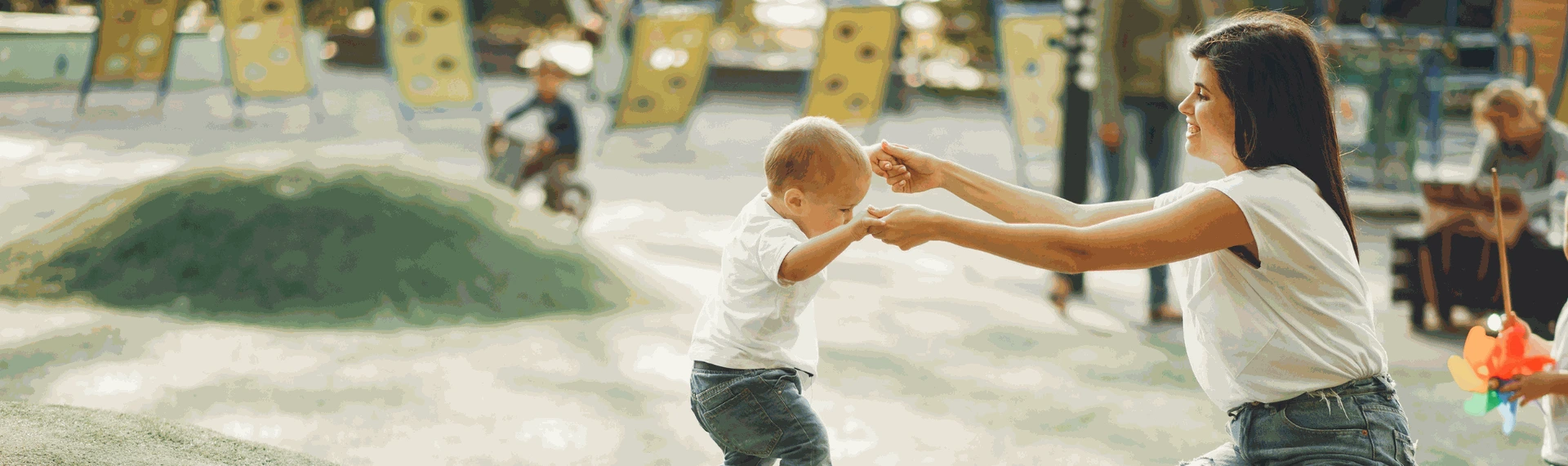
Standard 5.1: Relationships between educators and children
Respectful and equitable relationships are maintained with each child.
Start with this one
Think of a child whose behaviour puzzles you. What might it be telling you they need?
More questions for Standard 5.1
- How do we greet each child, and who gets the longest hello?
- What do children hear in our tone when we are rushed?
- How do we make sure quiet children get their share of our attention?
- How do we repair a moment when we have spoken sharply?
- How do we protect each child's dignity during nappy changes, toileting, and meals?
- How do children have a say in the routines that shape their day?
The elements of Standard 5.1
Element 5.1.1Positive educator to child interactions
Responsive and meaningful interactions build trusting relationships which engage and support each child to feel secure, confident and included.
Element 5.1.2Dignity and rights of the child
The dignity and rights of every child are maintained.
Standard 5.2: Relationships between children
Each child is supported to build and maintain sensitive and responsive relationships.
Start with this one
When a conflict starts, what is the first thing we do and the first thing we say?
More questions for Standard 5.2
- How do we help a child who wants to join play and cannot find a way in?
- What do children learn about helping one another from watching us?
- When a child's feelings are big, what helps them settle, and who stays with them?
- How do we help children say what they want and listen to what another child wants?
- What is a child's behaviour telling us they need, and how does our response meet that need?
The elements of Standard 5.2
Element 5.2.1Collaborative learning
Children are supported to collaborate, learn from and help each other.
Element 5.2.2Self-regulation
Each child is supported to regulate their own behaviour, respond appropriately to the behaviour of others and communicate effectively to resolve conflicts.
Quality Area 6: Families and communities
Collaborative partnerships with families and communities
Quality Area 6 is about families, communities, and the partners who know a child beyond our doors.
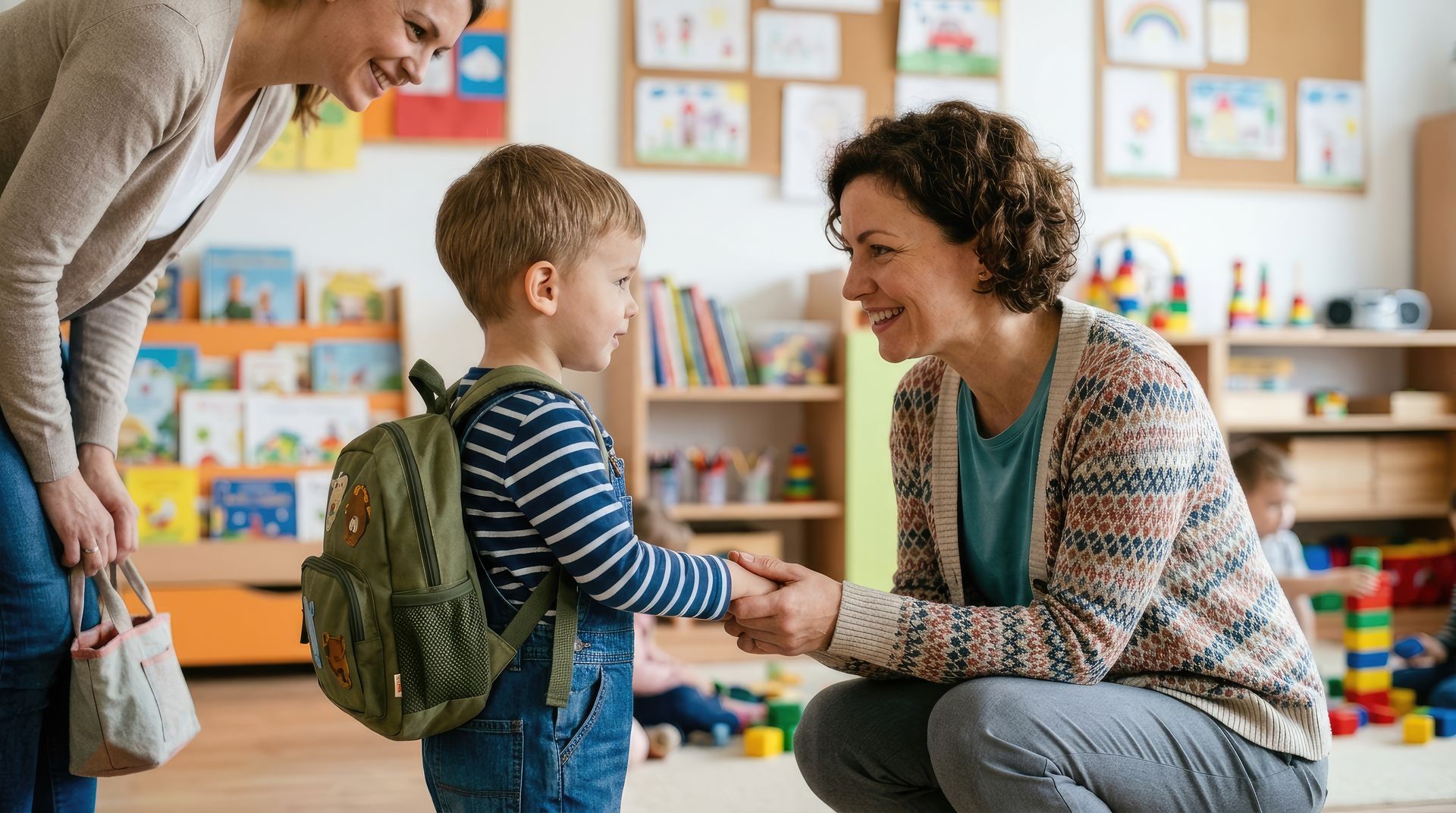
Standard 6.1: Supportive relationships with families
Respectful relationships with families are developed and maintained and families are supported in their parenting role.
Start with this one
What does a family's first week with us feel like from the family's side of the door?
More questions for Standard 6.1
- How do families shape decisions at our service, beyond answering a survey?
- Whose culture, language, and beliefs are visible in our day, and whose are not yet?
- How do we share information in a form each family can use?
- Who in our community could support a family through a hard time, and do we know how to connect them?
- How do we raise a worry about a child with a family?
The elements of Standard 6.1
Element 6.1.1Engagement with the service
Families are supported from enrolment to be involved in the service and contribute to service decisions.
Element 6.1.2Parent views are respected
The expertise, culture, values and beliefs of families are respected and families share in decision-making about their child's learning and wellbeing.
Element 6.1.3Families are supported
Current information is available to families about the service and relevant community services and resources to support parenting and family wellbeing.
Standard 6.2: Collaborative partnerships
Collaborative partnerships enhance children's inclusion, learning and wellbeing.
Start with this one
When a child leaves us, what do we pass on, and who decides?
More questions for Standard 6.2
- How do we share a child's learning with a school or the next service so their story carries on?
- Which specialists or agencies work alongside us, and how do we agree who does what?
- What keeps a child from taking part in our program, and who have we asked?
- How does our community see us, and how do we show up in it?
- Which community connection could we strengthen this year?
The elements of Standard 6.2
Element 6.2.1Transitions
Continuity of learning and transitions for each child are supported by sharing information and clarifying responsibilities.
Element 6.2.2Access and participation
Effective partnerships support children's access, inclusion and participation in the program.
Element 6.2.3Community engagement
The service builds relationships and engages with its community.
Quality Area 7: Governance and leadership
Quality Area 7 is about how the service is run and led, and how a team keeps learning together.

Standard 7.1: Governance
Governance supports the operation of a quality service that is child safe.
Start with this one
If a new family asked what we stand for, would every educator give the same answer?
More questions for Standard 7.1
- When did we last review our philosophy, and who was in the room?
- Which risks do we manage well, and which do we notice only after something happens?
- How do we check that our child safe practices are lived on the floor and not only written down?
- Which roles on our team are clear to everyone, and which rely on habit?
- How do we handle a complaint so a family feels heard and we learn something?
- How do we keep our policies useful to the people who use them?
The elements of Standard 7.1
Element 7.1.1Service philosophy and purpose
A statement of philosophy guides all aspects of the service's operations.
Element 7.1.2Management systems
Systems are in place to manage risk and enable the effective management and operation of a quality service that is child safe.
Element 7.1.3Roles and responsibilities
Roles and responsibilities are clearly defined, and understood, and support effective decision-making and operation of the service.
Standard 7.2: Leadership
Effective leadership builds and promotes a positive organisational culture and professional learning community.
Start with this one
What does our team need from its leaders this term that it is not getting?
More questions for Standard 7.2
- How do we know our quality improvement plan is changing practice?
- How does our educational leader get time, support, and a say?
- What does a performance conversation do for an educator's growth?
- How do we use what we know about turnover, incidents, and feedback to improve?
- How do we gather the views of children and families when we review our service?
- Where does learning happen in our team outside of meetings?
The elements of Standard 7.2
Element 7.2.1Continuous improvement
There is an effective self-assessment and quality improvement process in place.
Element 7.2.2Educational leadership
The educational leader is supported and leads the development and implementation of the educational program and assessment and planning cycle.
Element 7.2.3Development of professionals
Educators, co-ordinators and staff members' performance is regularly evaluated and individual plans are in place to support learning and development.
Quality Area 1: Educational program and practice
Quality Area 1 is about what children do and learn each day, and how educators decide what comes next.
Standard 1.1: Program
The educational program enhances each child's learning and development.
Start with this one
Think of one child in your room. What do you know about them that never makes it into their documentation?
More questions for Standard 1.1
- Which part of our program did a child shape this week?
- When a routine runs long, what do children lose and what do they gain?
- Where do we give children time to go deep, and where do we hurry them along?
- When we plan, how do we use our learning framework, and when do we reach for it only to write up?
- Which child's strengths are not yet visible in our program?
The elements of Standard 1.1
Element 1.1.1Approved learning framework
Curriculum decision-making contributes to each child's learning and development outcomes in relation to their identity, connection with community, wellbeing, confidence as learners and effectiveness as communicators.
Element 1.1.2Child-centred
Each child's current knowledge, strengths, ideas, culture, abilities and interests are the foundation of the program.
Element 1.1.3Program learning opportunities
All aspects of the program, including routines, are organised in ways that maximise opportunities for each child's learning.
Standard 1.2: Practice
Educators facilitate and extend each child's learning and development.
Start with this one
When did you last change your plan because of something a child said or did?
More questions for Standard 1.2
- What does intentional teaching look like in the most ordinary part of our day?
- Which of the questions we ask children have more than one good answer?
- When a child chooses something other than our plan, what do we do first?
- Which choices do children make every day, and which do we still make for them?
- How do we decide when to step in and when to step back?
The elements of Standard 1.2
Element 1.2.1Intentional teaching
Educators are deliberate, purposeful, and thoughtful in their decisions and actions.
Element 1.2.2Responsive teaching and scaffolding
Educators respond to children's ideas and play and extend children's learning through open-ended questions, interactions and feedback.
Element 1.2.3Child directed learning
Each child's agency is promoted, enabling them to make choices and decisions that influence events and their world.
Standard 1.3: Assessment and planning
Educators and co-ordinators take a planned and reflective approach to implementing the program for each child.
Start with this one
If a family read our documentation tonight, what would they learn about how their child thinks?
More questions for Standard 1.3
- At which point in our cycle does reflection happen, and who joins it?
- Which observation changed what we did next?
- Which part of our documentation does the most work for children, and which part mainly fills a page?
- How do families add to what we know about their child, and what do we do with it?
- How do we decide what is worth documenting and what we let go?
The elements of Standard 1.3
Element 1.3.1Assessment and planning cycle
Each child's learning and development is assessed or evaluated as part of an ongoing cycle of observation, analysing learning, documentation, planning, implementation and reflection.
Element 1.3.2Critical reflection
Critical reflection on children's learning and development, both as individuals and in groups, drives program planning and implementation.
Element 1.3.3Information for families
Families are informed about the program and their child's progress.
Quality Area 2: Children's health and safety
Quality Area 2 asks how we keep every child healthy, rested, and safe, and how we know our precautions are working.
Standard 2.1: Health
Each child's health and physical activity is supported and promoted.
Start with this one
Where in our day does a child's need for rest, food, or movement come second to the schedule?
More questions for Standard 2.1
- How do we notice a child who is tired, hungry, or unwell before they can tell us?
- What does rest look like for a child who does not sleep?
- Which hygiene habits do children see us model, and which do they see us skip?
- What do children eat and drink with us, and what do they learn about food from the way we do it?
- How much do children move across a day, indoors and out, and who moves least?
The elements of Standard 2.1
Element 2.1.1Wellbeing and comfort
Each child's wellbeing and comfort is provided for, including appropriate opportunities to meet each child's need for sleep, rest and relaxation.
Element 2.1.2Health practices and procedures
Effective illness and injury management and hygiene practices are promoted and implemented.
Element 2.1.3Healthy lifestyle
Healthy eating and physical activity are promoted and appropriate for each child.
Standard 2.2: Safety
Each child is protected.
Start with this one
Walk through your space as a visiting child would. Which risk have you stopped seeing?
More questions for Standard 2.2
- Where are the blind spots in our supervision, and who covers them?
- When did we last practise an emergency, and what did we change afterwards?
- What does every person on our team do the moment they are worried about a child's safety?
- Who could a child tell if something felt wrong, and how would the child know that?
- How do we welcome visitors, contractors, and new staff while keeping children safe?
The elements of Standard 2.2
Element 2.2.1Supervision
At all times, reasonable precautions and adequate supervision ensure children are protected from harm and hazard.
Element 2.2.2Incident and emergency management
Plans to effectively manage incidents and emergencies are developed in consultation with relevant authorities, practised and implemented.
Element 2.2.3Child safety and protection
Management, educators and staff are aware of their roles and responsibilities regarding child safety, including the need to identify and respond to every child at risk of abuse or neglect.
Quality Area 3: Physical environment
Quality Area 3 looks at the spaces children use, and whether they are safe, welcoming, and rich with things to explore.
Standard 3.1: Design
The design of the facilities is appropriate for the operation of a service.
Start with this one
If a child with different movement or sensory needs joined us tomorrow, which part of our space would get in their way?
More questions for Standard 3.1
- What do we check, how often, and where is it written down?
- Where do children find privacy, and where do educators keep a clear view?
- How well does our space work at our busiest time of day?
- Which fixtures or furniture have we outgrown?
- How do arrival and departure feel for children, families, and educators?
The elements of Standard 3.1
Element 3.1.1Fit for purpose
Outdoor and indoor spaces, buildings, fixtures and fittings are suitable for their purpose, including supporting the access of every child.
Element 3.1.2Upkeep
Premises, furniture and equipment are safe, clean and well maintained.
Standard 3.2: Use
The service environment is inclusive, promotes competence and supports exploration and play-based learning.
Start with this one
Crouch to a child's eye level in each of our spaces. Which one makes you want to stay?
More questions for Standard 3.2
- Which of our resources get used in many ways, and which in only one?
- Where can children reach natural materials and the outdoors every day?
- What do our spaces say about whose culture belongs here?
- What do we hold back from children that they could safely handle?
- How do children help care for our environment, and what do they learn from it?
The elements of Standard 3.2
Element 3.2.1Inclusive environment
Outdoor and indoor spaces are organised and adapted to support every child's participation and to engage every child in quality experiences in both built and natural environments.
Element 3.2.2Resources support play-based learning
Resources, materials and equipment allow for multiple uses, are sufficient in number, and enable every child to engage in play-based learning.
Element 3.2.3Environmentally responsible
The service cares for the environment and supports children to become environmentally responsible.
Quality Area 4: Staffing arrangements
Quality Area 4 is about who is with the children, how we organise ourselves, and how our team works together.
Standard 4.1: Staffing arrangements
Staffing arrangements enhance children's learning and development.
Start with this one
Picture the busiest half hour of our day. Where is each educator standing, and why?
More questions for Standard 4.1
- How do we organise ourselves so children can count on familiar adults?
- What happens to a child's day when an educator is away, and how do we soften it?
- Which of our arrangements work well, and which depend on goodwill?
- How do we plan the moments when a child moves between rooms or educators?
- How do we tell whether our rosters are helping children learn?
The elements of Standard 4.1
Element 4.1.1Organisation of educators
The organisation of educators across the service supports children's learning and development.
Element 4.1.2Continuity of staff
Every effort is made for children to experience continuity of educators at the service.
Standard 4.2: Professionalism
Management, educators and staff are collaborative, respectful and ethical.
Start with this one
When did a colleague last change your mind, and how did they do it?
More questions for Standard 4.2
- How do we disagree with one another and keep our respect?
- Which strengths on our team are underused?
- What does our code of ethics ask of us on the days we are tired?
- How do we raise a concern about a colleague's practice?
- What do new team members learn about us by watching?
The elements of Standard 4.2
Element 4.2.1Professional collaboration
Management, educators and staff work with mutual respect and collaboratively, and challenge and learn from each other, recognising each other's strengths and skills.
Element 4.2.2Professional standards
Professional standards guide practice, interactions and relationships.
Quality Area 5: Relationships with children
Quality Area 5 is about the relationships at the centre of our work, between educators and children and among children.
Standard 5.1: Relationships between educators and children
Respectful and equitable relationships are maintained with each child.
Start with this one
Think of a child whose behaviour puzzles you. What might it be telling you they need?
More questions for Standard 5.1
- How do we greet each child, and who gets the longest hello?
- What do children hear in our tone when we are rushed?
- How do we make sure quiet children get their share of our attention?
- How do we repair a moment when we have spoken sharply?
- How do we protect each child's dignity during nappy changes, toileting, and meals?
- How do children have a say in the routines that shape their day?
The elements of Standard 5.1
Element 5.1.1Positive educator to child interactions
Responsive and meaningful interactions build trusting relationships which engage and support each child to feel secure, confident and included.
Element 5.1.2Dignity and rights of the child
The dignity and rights of every child are maintained.
Standard 5.2: Relationships between children
Each child is supported to build and maintain sensitive and responsive relationships.
Start with this one
When a conflict starts, what is the first thing we do and the first thing we say?
More questions for Standard 5.2
- How do we help a child who wants to join play and cannot find a way in?
- What do children learn about helping one another from watching us?
- When a child's feelings are big, what helps them settle, and who stays with them?
- How do we help children say what they want and listen to what another child wants?
- What is a child's behaviour telling us they need, and how does our response meet that need?
The elements of Standard 5.2
Element 5.2.1Collaborative learning
Children are supported to collaborate, learn from and help each other.
Element 5.2.2Self-regulation
Each child is supported to regulate their own behaviour, respond appropriately to the behaviour of others and communicate effectively to resolve conflicts.
Quality Area 6: Families and communities
Collaborative partnerships with families and communities
Quality Area 6 is about families, communities, and the partners who know a child beyond our doors.
Standard 6.1: Supportive relationships with families
Respectful relationships with families are developed and maintained and families are supported in their parenting role.
Start with this one
What does a family's first week with us feel like from the family's side of the door?
More questions for Standard 6.1
- How do families shape decisions at our service, beyond answering a survey?
- Whose culture, language, and beliefs are visible in our day, and whose are not yet?
- How do we share information in a form each family can use?
- Who in our community could support a family through a hard time, and do we know how to connect them?
- How do we raise a worry about a child with a family?
The elements of Standard 6.1
Element 6.1.1Engagement with the service
Families are supported from enrolment to be involved in the service and contribute to service decisions.
Element 6.1.2Parent views are respected
The expertise, culture, values and beliefs of families are respected and families share in decision-making about their child's learning and wellbeing.
Element 6.1.3Families are supported
Current information is available to families about the service and relevant community services and resources to support parenting and family wellbeing.
Standard 6.2: Collaborative partnerships
Collaborative partnerships enhance children's inclusion, learning and wellbeing.
Start with this one
When a child leaves us, what do we pass on, and who decides?
More questions for Standard 6.2
- How do we share a child's learning with a school or the next service so their story carries on?
- Which specialists or agencies work alongside us, and how do we agree who does what?
- What keeps a child from taking part in our program, and who have we asked?
- How does our community see us, and how do we show up in it?
- Which community connection could we strengthen this year?
The elements of Standard 6.2
Element 6.2.1Transitions
Continuity of learning and transitions for each child are supported by sharing information and clarifying responsibilities.
Element 6.2.2Access and participation
Effective partnerships support children's access, inclusion and participation in the program.
Element 6.2.3Community engagement
The service builds relationships and engages with its community.
Quality Area 7: Governance and leadership
Quality Area 7 is about how the service is run and led, and how a team keeps learning together.
Standard 7.1: Governance
Governance supports the operation of a quality service that is child safe.
Start with this one
If a new family asked what we stand for, would every educator give the same answer?
More questions for Standard 7.1
- When did we last review our philosophy, and who was in the room?
- Which risks do we manage well, and which do we notice only after something happens?
- How do we check that our child safe practices are lived on the floor and not only written down?
- Which roles on our team are clear to everyone, and which rely on habit?
- How do we handle a complaint so a family feels heard and we learn something?
- How do we keep our policies useful to the people who use them?
The elements of Standard 7.1
Element 7.1.1Service philosophy and purpose
A statement of philosophy guides all aspects of the service's operations.
Element 7.1.2Management systems
Systems are in place to manage risk and enable the effective management and operation of a quality service that is child safe.
Element 7.1.3Roles and responsibilities
Roles and responsibilities are clearly defined, and understood, and support effective decision-making and operation of the service.
Standard 7.2: Leadership
Effective leadership builds and promotes a positive organisational culture and professional learning community.
Start with this one
What does our team need from its leaders this term that it is not getting?
More questions for Standard 7.2
- How do we know our quality improvement plan is changing practice?
- How does our educational leader get time, support, and a say?
- What does a performance conversation do for an educator's growth?
- How do we use what we know about turnover, incidents, and feedback to improve?
- How do we gather the views of children and families when we review our service?
- Where does learning happen in our team outside of meetings?
The elements of Standard 7.2
Element 7.2.1Continuous improvement
There is an effective self-assessment and quality improvement process in place.
Element 7.2.2Educational leadership
The educational leader is supported and leads the development and implementation of the educational program and assessment and planning cycle.
Element 7.2.3Development of professionals
Educators, co-ordinators and staff members' performance is regularly evaluated and individual plans are in place to support learning and development.

Download this Article
Please subscribe below to download a printable copy of this article: