It goes without saying keeping children safe is a core priority of our work. Many of us care so deeply about children’s safety that, without meaning to, we sometimes soften the world a little more than children need. And when we zoom out for a moment, we might wonder: in our efforts to protect children, are we leaving enough room for the kinds of challenges that help them thrive?
Exploring Adult-Supported Adventurous Play
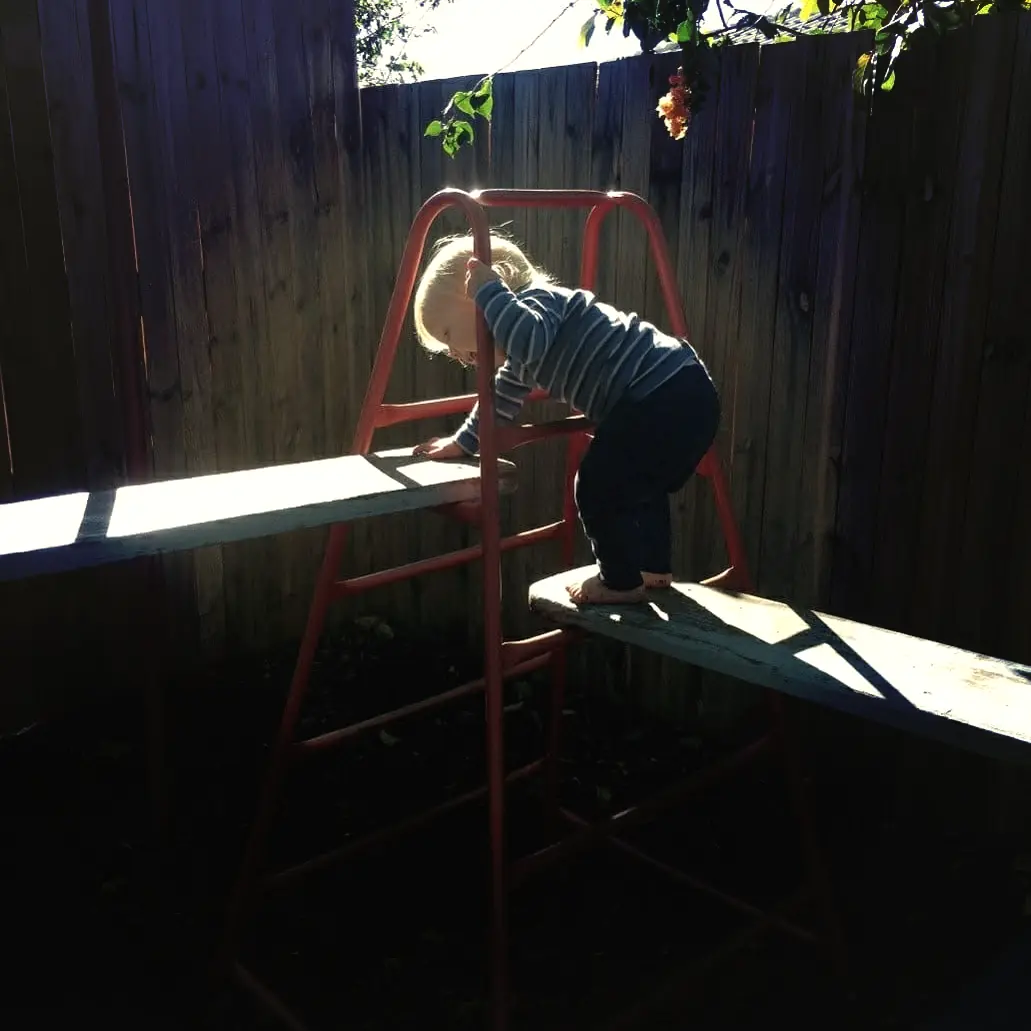
Picture this: you’re four years old. Your whole body is wired for movement, testing, stretching, climbing, experimenting. Yet the adults around you – with genuinely good intentions – have decided the slide is only for sliding down (on your bottom), the tree branches are trimmed just out of reach, and jumping from knee-height is the safest option. Rainy-day play is postponed, hanging upside down raises eyebrows, and running is only encouraged at the “right” speed.
But at four, your inner world is full of possibilities. You’re driven by deep human needs for freedom, fun, mastery, connection, and physical confidence. Someone calls out “That’s not safe!” and your reply is less about rebellion and more about instinct:
I’m learning what my body can do. Let me try!

Children will almost always find a way to introduce challenge into their play because challenge is how they meet their needs, build capability, and shape their emerging sense of themselves in the world. And often, they’ll seek that challenge where the adults can’t see – not out of defiance, but out of a fundamentally human urge to grow.
“Children are designed by nature to teach themselves emotional resilience by playing in risky, emotion-inducing ways.
In the long run, we endanger them much more by preventing such play, than allowing it. And we deprive them of fun”. - Peter Gray, 2014
We’re ‘better safe than sorry’ right? Research suggest otherwise.
The research is clear – in order to grow into holistic, healthy and well-rounded adults, children must have exposure to risk in childhood. It’s what human beings have been doing throughout evolution. (Dodd & Leister, 2021; Dodd et al., 2023; Fannin et al. 2024; Gray, 2011; Hones et al, 2025; Kambas et al., 2004).
As education and care settings, we are in a unique position to provide access to risky/adventurous play opportunities for children. And the benefits make this a no-brainer;
- Promotes social and emotional development such as encouraging others to overcome obstacles (Jones, et al, 2025)
- Improves children's sense of self, strengthens friendships, supports self-regulation, confidence to take social risks such as ask a peer to play
- Promotes confidence, self-esteem and resilience
- Builds better dexterity, skeletal muscle development, and physical awareness (Fannin et al., 2024)
- Enhances bone density in children by about 5-10% when benchmarked at ages 5, 8, and 11. (Fannin et al., 2024)
- Engagement in risky play can offer opportunity for children to navigate uncertainty and coping, leading to decreased anxiety over time - Dodd & Lester, (2021)
I’m into risky play but…
While we all understand the benefits of risky play, the stumbling block appears when we try to implement it. Fear not, adventurers, this two part blog is filled with top tips for understanding what is risky play, and how to go about implementing it in your service in a way that meets the needs of everyone; children, families and educators.
Is the term ‘risk’ freaking you out?
If you’re struggling with the term ‘risk’ and the negative connotations it can hold, lets try and handy reframe?
How about ‘Adult Supported Adventurous Play’?
Feeling better? Great – lets move on.
Types of adventurous play
Ellen Sandsetter categorised eight types of risky play (adult supported adventours play). These are;
1. Play at Speed - running down a hill, riding fast on a bike
2. Play at Heights - in a tree, on a playground, up a ladder...
3. Play with Dangerous Tools - power tools, saws, hammers etc
4. Play with a chance of being lost – eg hiding where no one can see you (or you THINK no one can see you),
5. Play with Dangerous Elements – in a creek, with fire etc.
6. Rough and Tumble Play - play which has contact e.g. wrestling, play fighting.
7. Play with Impact - jumping off something, running and crashing into a mat etc
8. Vicarious Play – experiencing the thrilling feeling from watching others engage in risky play
In our online webinar and workshop, we explore more about how each category of adventurous play looks in practice and how to plan and facilitate it.
The law and regulations:
There are often many misconceptions about the National Law and regulations. Let’s straighten a few things out.
Under the Education and Care Services National Law Act 2010, Section 167 Offence relating to protection of children from harm and hazards states:
The approved provider, nominated supervisor or family day care educator of an education and care service must ensure that every reasonable precaution is taken to protect children being educated and cared for by the service from harm and from any hazard likely to cause injury.
The National Quality Standard 2.2.1 (Supervision) states: At all times, reasonable precautions and adequate supervision ensure children are protected from harm and hazard
The take away message is the national law does not require services to eliminate all risk and challenge from children’s play or environments. Some risks are acceptable due to the developmental benefits they offer i.e. the benefits outweigh the risks.
In reality:
“Children are designed by nature to teach themselves emotional resilience by playing in risky, emotion-inducing ways.
In the long run, we endanger them much more by preventing such play, than allowing it. And we deprive them of fun”. - Peter Gray, 2014.
Ultimately, children WILL find ways to challenge themselves in play. When we take away elements of risk, in the name of safety, children quickly master the challenge we do provide and go looking for more...often using play spaces in ways they were not intended – climbing onto the top of playground structures or hanging off areas not accommodating the required fall zone and materials. In these moments, it can be argued, our playgrounds have become so safe, they’re dangerous.
Part two of this series will dive into how we implement adventurous play in early learning and school aged care settings.
Author: Linda Price