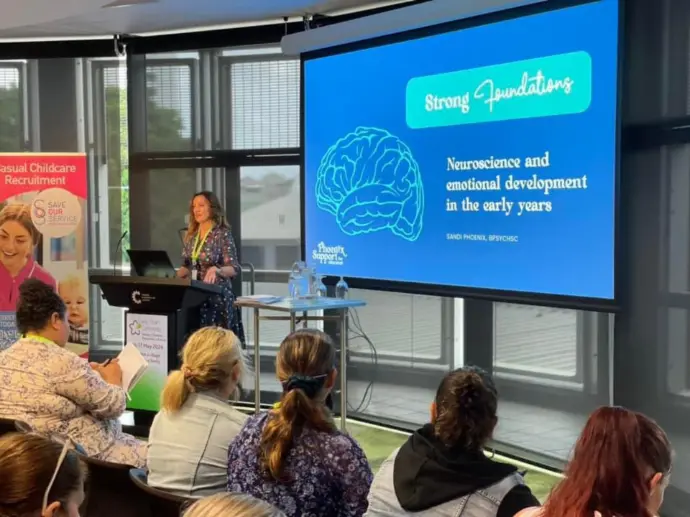
What aspects of emerging science about the brain are most useful in our role as educators and teachers? We love analogies and metaphors, but which ones will truly bring us closer to understanding the current research on the brain, its functions, and emotions? What does science reveal about emotions and children's subsequent behaviour? Sandi will delve into these questions and more, unpacking recent brain science and its implications for our pedagogy. Spoiler alert: We can't teach about emotions with emojis! 😉
CONTENT OVERVIEW
This presentation delves into the latest research to deepen our understanding of brain functions and emotional development in young children. It examines the science behind emotions and behaviour, highlighting how these insights can inform our early years pedagogy.
This presentation offers a forward-thinking perspective on the integration of neuroscience and emotional development to revolutionise our understanding of emotional development in early years education. Educators' approach to fostering emotional development significantly impacts children, making it crucial to understand how neuroscience informs our curriculum decisions. This knowledge empowers us to better comprehend how our actions profoundly affect children's emotional development.
We will also utilise the Phoenix Cups framework as an innovative tool for translating theory into action. Through this lens, educators will learn to support both 'emotional literacy' and 'needs literacy' in their curriculum decision-making. These programs not only address the emotional and behavioural needs of children but also teach them to understand and articulate their own needs, fostering a deep sense of self-awareness and emotional intelligence.
PARTICIPANT OUTCOMES
By the end of this session, participants will:
- Gain a comprehensive understanding of the neuroscience behind emotional development and its implications for early childhood education.
- Learn how to utilise the Phoenix Cups framework as a shared language to scaffold the building blocks of emotional intelligence.
- Develop strategies for teaching children to identify and articulate their needs, enhancing their emotional literacy.
- Feel confident in integrating insights from psychological science and neuroscience into their daily practices to foster a deeper emotional resilience in children.