About
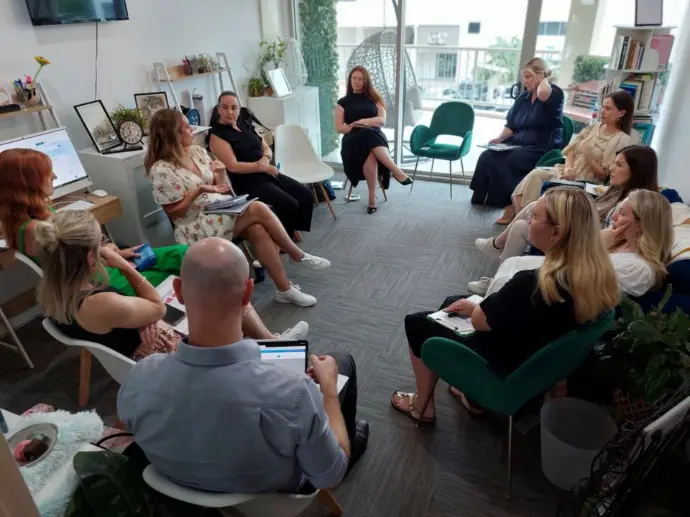
Strong Leaders, Stronger Teams is a leadership course for educators and leaders who want to lead with clarity, compassion and purpose.
Rather than relying on control, compliance or positional authority, this learning explores leadership as a relational, needs-informed practice. Educators are supported to understand how leadership styles, stress responses and wellbeing shape team dynamics, communication and behaviour change within education and care settings.
Grounded in positive psychology, contemporary neuroscience and the Phoenix Cups Framework, the course unpacks how meeting adult needs supports motivation, psychological safety and professional growth. Through reflection, real-world scenarios and practical tools, participants explore how to coach and mentor others, navigate change with confidence and foster cultures built on trust, respect and shared purpose.
Whether you are new to leadership or seeking to strengthen your existing practice, this course supports you to clarify your leadership identity and lead teams towards meaningful, sustainable improvement.
We will
- explore a range of leadership styles and reflect on how your strengths, needs and values influence the way you lead and motivate others
- apply strengths-based, solutions-focused and guidance-aligned approaches to coaching and mentoring educators through behaviour change
- examine team culture, communication and problem-solving through a neuroscience- and needs-informed lens
- explore how adult wellbeing, stress and unmet needs impact leadership capacity and team dynamics
- build confidence in navigating change, addressing challenges and supporting teams through uncertainty
- engage in shared critical reflection to embed leadership strategies into everyday practice and Quality Improvement planning

Participant outcomes
By the end of this course, participants will have:
- a clear understanding of their leadership style and how it influences team motivation, communication and behaviour change
- practical strategies for coaching, mentoring and strengthening educator capability using strengths-based and needs-informed approaches
- confidence in navigating change, addressing challenges and supporting team wellbeing with clarity and compassion
- skills to create and sustain a positive organisational culture grounded in psychological safety, collaboration and reflective practice
- the ability to lead through connection, using the Phoenix Cups Framework to understand and support the needs of their team
Theoretical underpinnings
The Phoenix Cups Framework
Sandi Phoenix
Understanding the drivers and motivators of human behaviour can revolutionise us as leaders. Applying a needs-based lens that helps leaders understand their own needs and those of their team, creating workplaces where everyone can thrive.
Values in Action Character Strengths
Peterson & Seligman
This framework helps leaders identify their strengths and those of their team, using them to build authentic leadership, enhance communication, and shape positive, strengths-focused team cultures to support self-awareness, empathy and wellbeing across the team.
Positive Psychology
Martin Seligman & Mihaly Csikszentmihalyi
Highlights strengths, wellbeing and meaning as foundations for effective leadership, guiding leaders to build flourishing teams rather than manage deficits. Explore how hope, belonging and purpose shape intrinsic motivation and behaviour change.
Self Determination Theory
Edward Deci & Richard Ryan
By understanding the universal needs for autonomy, competence and relatedness in themselves and their team, leaders learn to support intrinsic motivation, build trust, reduce resistance to change and create workplace cultures where people feel capable and connected.

National alignments
QA4 – Staffing Arrangements (Elements 4.1.1, 4.2.1, 4.2.2): Strengthens collaborative, professional team cultures through reflective, needs-based leadership.
QA6 – Collaborative Partnerships (Element 6.1.1): Enhances leaders’ ability to model respectful, authentic partnerships with families and communities.
QA7 – Governance and Leadership (Elements 7.2.1, 7.2.2, 7.2.3): Builds leadership capability in continuous improvement, mentoring, and embedding a shared philosophy.
Standard 1.2: Know learners and how they learn: Deepens leaders’ understanding of how educator needs, strengths and wellbeing influence children’s learning environments.
Standard 2.3: Curriculum, assessment and reporting: Strengthens leaders’ ability to coach educators in designing meaningful learning sequences.
Standard 4.1: Support student participation: Supports leadership that prioritises inclusive, needs-meeting practice across classrooms and teams.
Standard 4.3: Manage challenging behaviours: Reframes behaviour as an expression of unmet needs and strengthens guidance-based team approaches.
Standard 6.3: Engage with colleagues and improve practice: Builds collaborative learning cultures where reflective dialogue and shared inquiry thrive.
Standard 7.4: Engage with professional teaching networks: Encourages ongoing engagement with the Phoenix Cups Community to enhance reflective practice.
Principle 1 – Child safety and wellbeing are embedded in organisational leadership, governance and culture: Leadership ensures decisions centre children’s rights, needs and safety.
Principle 5 – People working with children are suitable and supported: Promotes mentoring, Reflective supervision and wellbeing support for educators.
Principle 7 – Staff are equipped with the knowledge, skills and awareness to keep children safe: Leadership strengthens educator capability through reflective, needs-focused coaching.
Principle 8 – Physical and online environments minimise the opportunity for harm: Leaders oversee safe, predictable and responsive environments that reduce risk.
Culturally Safe, Inclusive & Responsive Programs
- Builds leadership capacity to foster inclusive workplaces where cultural identities are respected and celebrated.
- Supports leaders to guide educators in culturally responsive planning and communication.
Social & Emotional Learning
- Supports leaders to build emotionally safe, regulated team cultures that model SEL for children.
- Strengthens capacity to coach educators in co-regulation and relational pedagogy.
- Enhances leadership approaches that prioritise wellbeing and connection.
Equity and Access for All
- Strengthens leadership skills in identifying barriers to equitable participation.
- Supports leaders to build inclusive practices aligned to family and community needs.
Access & Inclusion
- Strengthens leaders’ capacity to identify inequities and create more accessible, inclusive team and learning environments.
- Supports reflective leadership that prioritises fairness, belonging and participation.
Communication (Language Development)
- Develops leadership that strengthens team communication, collaboration and shared language.
- Helps leaders coach educators in using attuned, relational communication with children.
Wellbeing (Social & Emotional)
- Builds leadership practices that enhance team wellbeing, directly influencing children’s emotional safety.
- Supports leaders to cultivate regulated, reflective and cohesive team cultures.
Online Course Option:
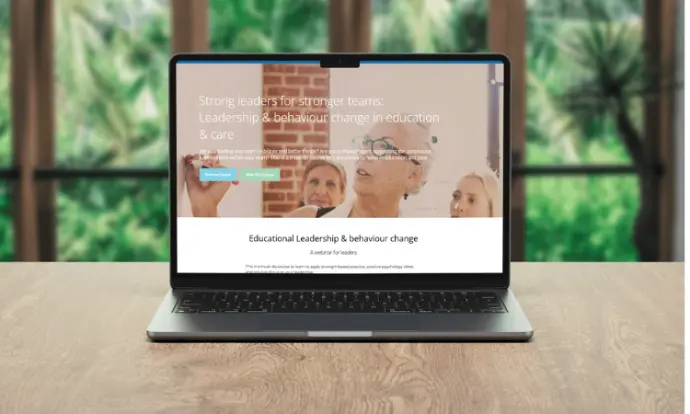
Prefer to engage in this training from the comfort of your own home? We get it!
That's why we created the self-paced online course, with video content and downloadable workbooks.

More on strong leadership
Interested in crafting a culture of wellbeing as an Educational Leader? You can read all about it in our blog.