About
The Educator Toolkit for Behaviour is a comprehensive course that supports educators and teams across education and care settings to deepen their understanding of behaviour and respond with clarity, confidence and care.
This program is designed to empower educators, providing a deep dive into the intricacies of psychology and behaviour. It arms practitioners with a comprehensive framework, melding contemporary psychological insights with practical strategies. Trusted by thousands of educators for over a decade, this go-to guide is essential for those looking to enhance their understanding and approach to children and young people’s behaviour.
With this program, you and your team will gain access to a robust framework that not only helps you understand children and young people’s behaviour but also guides you in planning for their social, emotional, and behavioural learning. But that's not all - you'll also learn how to forge meaningful relationships and cultivate environments where everyone can truly flourish.
This course is thoughtfully crafted to provide educators with a holistic framework, rooted in the principles of humanistic and positive psychology. This framework acts as a guiding light, leading teams towards fresh perspectives on children and young people's behaviour.
We get that a child or young person's social and behavioural learning journey is complex and ever evolving. Educators with this insight are better placed to interpret behavioural indicators as signs of unmet needs. This course will equip you with the tools to address these needs with a well-thought-out plan, while also celebrating the child or young person's existing strengths and capabilities.
This program aims to foster a shared language around a model of human needs, enhancing practitioners' ability to identify children and young people's needs based on behavioural indicators. You'll learn how to design programmes that not only support children and young people in acquiring the necessary skills to meet their needs but also encourage them to consider the needs and rights of others.
Throughout this course, you'll gain access to practical strategies, invaluable tools, and essential resources. We'll also provide you with clear guidelines on how to facilitate solution-focused discussions about behavioural challenges with your team. You’ll critically reflect together to improve the educational program and practice, explore intentional, well-resourced, and child-focused self-directed play opportunities, and discuss how to minimise transitions to increase children and young people’s self-efficacy or agency.
We will
- Explore the Phoenix Cups Framework and humanistic, positive psychology foundations to understand needs-based behaviour and guide contemporary, non-behaviourist approaches.
- Examine how unmet needs appear in behaviour and how educators can respond through intentional, supportive planning.
- Work through real-life examples, reflective discussions, and practical strategies for designing environments that foster agency, autonomy, and wellbeing.
- Learn how to facilitate solution-focused team conversations, reduce unnecessary transitions, and support child-led, meaningful play.


Participant Outcomes
By the end of this workshop, participants will be able to:
- Honour children and young people's attempts to meet their needs through their actions, promoting children’s rights, autonomy, and choices.
- Recognise and address children and young people's emotional needs for safety, connection, self-esteem, mastery, freedom, and fun.
- Engage in critical reflection on what motivates children and young people’s behaviour and how to support children and young people in meeting their needs.
- Appreciate the significance of self-directed (intentional and well-resourced) play.
- Implement strategies to minimise transitions and recognise children and young people’s need for movement, sensory integration, and schematic play.
- Foster children and young people's agency and build accepting, respectful relationships with spirited children and young people.
Theoretical underpinnings
Guidance Approach
Dr Louise Porter
Behaviour is understood as a child or young person’s communication of unmet needs. When educators respond with curiosity, connection and guidance, they strengthen children and young people’s regulation, wellbeing and capacity to learn.
Positive Psychology
Seligman & Csikszentmihalyi
Focuses on strengths, wellbeing, optimism and what helps humans flourish. Emphasising strengths-based language, noticing what’s going well, building children’s capacity, and creating conditions where positive behaviours naturally thrive.
Self-Determination Theory
Ryan & Deci
Children and young people’s motivation and behaviour are shaped by their needs for autonomy, competence and connection. Environments that honour these needs support engagement, resilience and positive behavioural growth.
Choice Theory
Dr William Glasser
Proposes that all behaviour is driven by internal needs and that individuals choose behaviours to meet those needs. This prompts reflection on the function of behaviour and supporting children and young people to meet their needs through skills to meet those needs.

National alignments
QA1 – Educational Program and Practice (Elements 1.1.1, 1.2.1, 1.2.2): strengthens intentional, responsive practices that promote holistic wellbeing.
QA2 – Children’s Health & Safety (Elements 2.1.1, 2.2.2, 2.2.3): equips educators with needs-based, trauma-informed strategies to build emotionally safe environments that reduce stress, prevent escalation, and uphold children’s rights, dignity and safety.
QA3 - Physical Environment (Element 3.2.1): assists educators in adapting spaces, routine and transition to reduce stressors, support sensory need and encourage inclusive participation
QA7 – Governance and Leadership (Elements 7.2.1, 7.2.3): promotes reflective practice, educator capability and a service-wide commitment to wellbeing.
Standard 4.1 – Support student participation: supports educators to foster inclusive, safe, and regulated environments that enable all children to participate.
Standard 4.3 - Manage challenging behaviour: promotes proactive, needs-based responses that prevent escalation and build respectful, co-regulated interactions.
Standard 6.2 – Engage in professional learning: strengthens reflective practice, team capacity and ongoing growth in behaviour guidance.
Principle 1 – Child safety and wellbeing are embedded in organisational leadership, governance and culture. The course supports a culture where children’s needs, rights and wellbeing guide every decision.
Principle 2 – Children are safe, informed and participate in decisions affecting them. A needs-based, guidance approach strengthens children’s agency, voice and meaningful participation.
Principle 3 – Families and communities are informed and involved. Wellbeing planning encourages transparent communication and genuine partnership with families.
Principle 5 – People working with children are suitable and supported. Educators develop reflective, relational skills that strengthen safe, attuned practice.
Principle 6 – Processes to respond to complaints and concerns are child-focused. The focus shifts from blame or behaviour management to understanding needs and providing support.
Social and Emotional Learning:
- Supports educators to strengthen children’s regulation, resilience, and emotional literacy through co-regulated, needs-based strategies.
- Helps educators recognise stress responses and respond with connection, predictability, and attuned guidance.
Equity and Access for all:
- Equips educators to identify and reduce barriers to participation through relational, trauma-informed practice.
- Supports adjustments to environments, routines, and expectations to meet diverse sensory, developmental, and cultural needs.
- Promotes fair, respectful behaviour guidance that upholds dignity and enables equitable engagement.
Physicality:
- Encourages educators to use movement, sensory input, and proprioceptive play as tools for regulation and engagement.
- Supports the creation of environments that allow children to move, climb, explore, and reset their nervous systems.
Oral language and communication:
- Helps educators use connection-focused language that models emotional vocabulary and co-regulation.
- Supports educators to guide behaviour through respectful interactions, “say what you see,” and collaborative problem-solving.
- Builds children’s capacity to express needs, feelings, and intentions in safe, supported ways.
Social & Emotional Learning
- Builds educator capability to support children’s regulation, resilience and emotional literacy through attuned, needs-based guidance.
- Reduces stress responses by fostering predictable, relationally safe environments.
- Strengthens children’s confidence, coping skills and capacity to engage positively with peers.
Access & Inclusion
- Promotes relational, needs-based and trauma-informed approaches that honour each child’s developmental and cultural needs.
- Reduces barriers to engagement for children experiencing vulnerability, sensory needs or behavioural overwhelm.
- Ensures children feel safe, included and supported to participate meaningfully in the learning community.
Self-Regulation
- Supports educators to understand stress behaviour and respond with co-regulation rather than correction.
- Builds children’s skills in managing emotions, impulses and transitions.
- Creates calmer, more predictable environments that enable children to stay engaged and learn effectively.
Online course option
Prefer to engage in this training from the comfort of your own home? We get it!
That's why we created the self-paced online course, with video content and downloadable workbooks.
Find Out More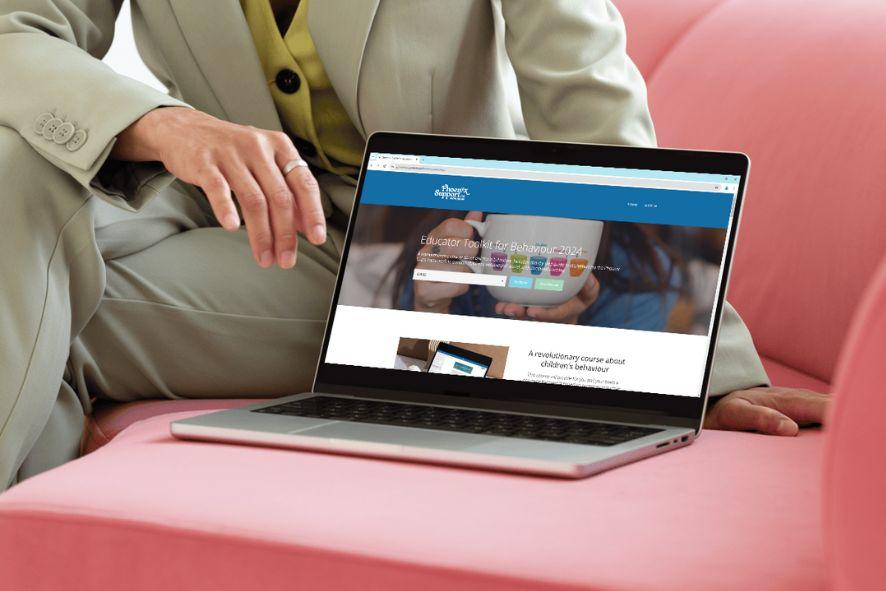
The Educator Toolkit for Behaviour Workbook
The Educator Toolkit for Behaviour Workbook is an essential resource for teachers and educators to embed The Phoenix Cups® framework; a philosophy in which your team can share ideas, language, and understandings about human behaviour.

More on behaviour
Interested in understanding behaviour? You can read all about it in our blog.